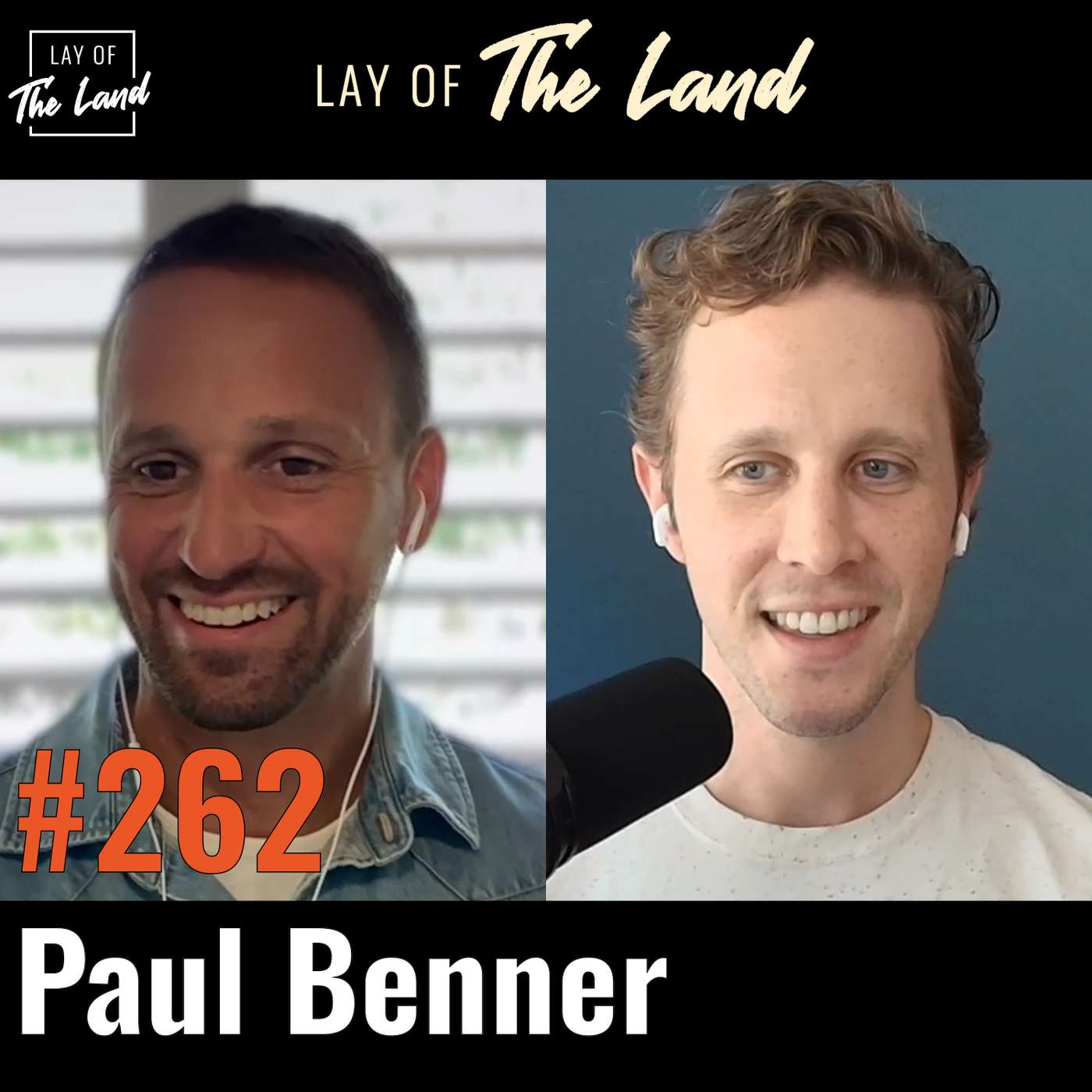
#262 Paul Benner — Platform Beer Company

 Apple Podcasts
 Spotify
 YouTube
 Castro
 RSS Feed
 Key Takeaways
- Platform Beer Company began in 2014 as a small neighborhood brewery in Cleveland and experienced hypergrowth before being acquired by Anheuser-Busch in 2019.
- Entrepreneurial success often comes from simply taking the first step; completing one venture builds the confidence and network needed for future opportunities.
- A commitment to constant experimentation and being first to market with emerging beer trends defined Platform's distinct brand identity and market position.
- Post-Platform, founder Paul Benner transitioned into new ventures, including Bitcoin mining in West Texas and serving as U.S. CEO of Pinter.
Paul Benner is the founder of Platform Beer Company. What began in 2014 as a tiny neighborhood brewery grew remarkably quickly through constant experimentation before ultimately being acquired by Anheuser-Busch in 2019. Platform was also personally meaningful to me…. with many formative conversations in my own entrepreneurial journey and life having occurred within its walls.
In our conversation, Paul and I unpack the full Platform story—from his early interest in entrepreneurship and homebrewing, to Cleveland Brew Shop, Platform’s founding insight, hypergrowth, acquisition, COVID, and its eventual closure. We then explore what came after: separating his identity from the company, leaving and ultimately returning to Cleveland, going deep on Bitcoin and building a mining operation in West Texas, his thinking on money, inflation, affordability, and the K-shaped economy, and his return to beer as U.S. CEO of Pinter here in Cleveland.
00:00 Introduction and guest background
02:25 The significance of Cleveland and Platform's legacy
05:42 Early entrepreneurial influences and interest in beer
10:27 Starting the Cleveland Brew Shop and market insights
12:46 The power of doing and first-mover advantage
16:05 Launching Platform Beer Company
22:33 Growth, experimentation, and industry trends
28:09 Scaling challenges and navigating rapid growth
33:17 Impact of COVID-19 and strategic reflections
39:56 Post-Platform identity and exploring new ventures
42:15 Discovering Bitcoin and its influence
55:09 Building in the world of Bitcoin mining
01:00:11 The role of reading, learning, and curiosity
01:03:22 Reflections on success and happiness
01:08:13 Returning to Cleveland and local appreciation
01:11:33 Favorite hidden gems in Cleveland
01:13:22 Closing thoughts and contact information
-----
LINKS:
https://pinter.com/
-----
SPONSOR:
Cerity Partners
Cerity Partners, a full-service investment and wealth management firm serving high-net-worth individuals, entrepreneurs, and business owners, is proud to sponsor Lay of The Land. The firm has local roots in Cleveland and across Ohio, and like this podcast, Cerity Partners advisors specialize in serving the interests of local entrepreneurs and business leaders. The firm’s national presence means it can offer the resources and specialized knowledge of the largest institutions with the independence and service of a neighbor. The Cerity Partners Cleveland team understands the complexity that comes with wealth, and they adhere to fiduciary standards. Discover the financial lay of your land.
Learn more at https://ceritypartners.com/NPR or call 216-464-6266.
Roundstone Insurance
Roundstone Insurance is proud to sponsor Lay of The Land. Founder and CEO, Michael Schroeder, has committed full-year support for the podcast, recognizing its alignment with the company’s passion for entrepreneurship, innovation, and community leadership.Headquartered in Rocky River, Ohio, Roundstone was founded in 2005 with a vision to deliver better healthcare outcomes at a more affordable cost.
Over the past two decades, Roundstone has grown rapidly, creating nearly 200 jobs in Northeast Ohio. The company works closely with employers and benefits advisors to navigate the complexities of commercial health insurance and build custom plans that prioritize employee well-being over shareholder returns. By focusing on aligned incentives and better health outcomes, Roundstone is helping businesses save thousands in Per Employee Per Year healthcare costs. Roundstone Insurance — Built for entrepreneurs. Backed by innovation. Committed to Cleveland.
Learn more at https://roundstoneinsurance.com/
-----
Stay up to date by signing up for Lay of The Land's weekly newsletter — sign up here: https://layoftheland.ck.page/5f0c1e28fa
Connect with Jeffrey Stern on LinkedIn — https://www.linkedin.com/in/jeffreypstern/
Follow Lay of The Land on X @podlayoftheland
--
Stay up to date on all Cleveland Startup and Entrepreneurship stories by signing up for Lay of The Land's weekly newsletter — sign up here.
Frequently Asked Questions
Who founded Platform Beer Company?
Platform Beer Company was founded in 2014 by Paul Benner and his business partner Justin.
When was Platform Beer Company acquired by Anheuser-Busch?
Platform Beer Company was acquired by Anheuser-Busch in 2019, following a period of rapid growth and extensive product experimentation.
What was Paul Benner's first business in the beer industry?
Paul Benner's first retail venture in the beer industry was Cleveland Brew Shop, which opened in 2012 in the Tremont neighborhood to serve homebrewers.
What is Paul Benner doing now?
After exploring Bitcoin and building a mining operation in West Texas, Paul Benner returned to the beer industry as the U.S. CEO of Pinter in Cleveland.
Paul Benner [00:00:00]:
Yeah, once you do the first one, it's like, you know, once you have gotten over the hump of opening your first business, it's amazing how opportunities are presented to you, right? To me, it's like I've always overencouraged people, just do it. Because even, even if you fail, it's amazing what opportunities start flowing your way because of that first one is under your belt.
Jeffrey Stern [00:00:18]:
Welcome to the Lay of the Land podcast, where we are exploring what people are building in Cleveland and throughout Northeast Ohio. I am your host, Jeffrey Stern, and today I had the real pleasure of speaking with Paul Benner, founder of Platform Platform Beer Company. What began in 2014 as a tiny neighborhood brewery grew remarkably through constant experimentation before ultimately being acquired by Anheuser-Busch in 2019. Platform was also personally meaningful to me, with many formative conversations in my own entrepreneurial journey and life having occurred within its walls. In our conversation, Paul and I unpack the full Platform story, from his early interest in entrepreneurship and homebrewing to Cleveland Brew Shop, Platform's founding insight, hypergrowth, acquisition, COVID, and its eventual closure. We then explore what came after, separating his identity from the company itself, leaving and ultimately returning to Cleveland, going deep on Bitcoin and building out a mining operation in West Texas, his thinking on money, inflation, affordability in the K-shaped economy, and his return to beer as US CEO of Pinter here in Cleveland. So please enjoy this awesome conversation with Paul Benner. Lay of the Land is brought to you and is proudly sponsored by Serity Partners.
Jeffrey Stern [00:01:34]:
As a wealth management firm, Serity Partners shares Lay of the Land's same dedication to serving local business owners, and the Serity Partners Cleveland team understands the challenges that entrepreneurs and founders face here in Cleveland, Northeast Ohio, and beyond. Wealth comes with complexity and increased demands on time and resources. It is easy to become overwhelmed. Serenity Partners clients benefit from a unified team of local specialists who coordinate across both business and personal needs. With Serenity Partners' commitment to transparency and putting clients' needs first, complexity can become clarity. To learn more, please visit serenitypartners.com or call 216-464-6266 today. Serenity Partners, proud to be recognized as one of the top financial advisory firms in the country.
Jeffrey Stern [00:02:25]:
I've been looking forward to this one for a longer time than I even knew you, actually. And I have to preface with just, you know, my experience with Platform because it's such a staple institution of my time here in Cleveland. The Red Martian and the Pink Martian were legitimately my 2 favorite drinks for years. And I have so many memories tied to Platform. Platform is where I went the day my first company failed. Platform is where I went countless times with my co-founder Lucky over the course of building the company that came after that. Actual Platform is also where I had one of the first conversations with my partner Ray about what would become the Ohio Fund. And so just before like getting into anything else, I want to, I'm grateful that it existed and it really was a special place.
Jeffrey Stern [00:03:16]:
And, you know, I knew the beer, the sours, the brand, the experience of going there, but I don't, I don't know the story, so I really am excited and grateful that, that you're here to reflect a little bit. And obviously you've done a lot more since then, but just, uh, to have you on.
Jeffrey Stern [00:03:32]:
So thank you.
Paul Benner [00:03:32]:
I feel partly responsible for your success.
Jeffrey Stern [00:03:34]:
I, there's, there's, you could take some credit, honestly.
Paul Benner [00:03:39]:
I have to say it is, gosh, it was always, and it still is the one of the best parts about owning a business like ours, which, which was a retail business that a lot of people had, you know, experiences in, is, is them telling a story about something that happened while they're at my place. Whether it's, you know, people would write in and say, you know, they had their first date there, they're married, they have 2 kids now. People, we had multiple proposals over the years at our pub, a couple weddings there. And then, I mean, I can't, I can't, can probably not even comprehend all of the meetings such as yours that happened in those 4 walls. And to me, that's a part of, I guess, the legacy of of my brand is that, uh, you know, so many unique things happened at a point in people's lives, uh, in that place. And, and you can't take that away, right?
Jeffrey Stern [00:04:32]:
No, you, you certainly can't. It's, it's a legacy to be proud of. And I think you could, you know, I could attribute a lot of, a lot of what's happened in my life from conversations that I've had from the platform.
Paul Benner [00:04:43]:
I wouldn't be surprised if there was at some moment you and I ran into each other, you know? Yeah, down there.
Jeffrey Stern [00:04:48]:
Absolutely. And just reconnecting the dots now.
Paul Benner [00:04:52]:
Well, Jeff, I'm really happy to be on and I'm, I think I've told you this before, but I just love what you're doing. Just spotlighting the different stories of so many great entrepreneurs and just normal people in the Cleveland area that are doing great things and keep it up. Good work. So I'm humbled to be here. I don't know if I should be in those ranks, but I'm excited to chat with you for an hour here.
Jeffrey Stern [00:05:16]:
Awesome. So I'd love to just maybe just start with, with the platform chapter, you know, like what, what was happening in your life when beer went from something you were interested in to something you thought you could pursue? Like what, what was the foundation that was laid and set you on this path to wanting to create the space?
Paul Benner [00:05:41]:
Yeah. You know, I, I did, I wasn't a, uh, wasn't an 18-year-old or 21-year-old and it's like, God, I love beer in that way. I mean, of course I loved beer more as a consumer, of course. And I never was like, gosh, I really wanna, I could see myself starting a business and my career's gonna be in beer for the rest of my life. Uh, that was not me by any means. I was, uh, I definitely saw myself more as somebody who I was interested in starting a business and that was like a bit of an obsession for me in my, um, my early 20s. Um, and, and tried quite a few things. Uh, a couple of them minor success, many of them huge, huge failures.
Paul Benner [00:06:21]:
But I was obsessed with starting a business at, at some point in my life. And, uh, how I got into—
Jeffrey Stern [00:06:26]:
Where, where did that obsession come from?
Paul Benner [00:06:28]:
Yeah, so it's, it's interesting. So my, me and my 2 brothers, so I'm one of 3 kids. And all 3 of us, you know, have a bit of an entrepreneurial spark. None of that came from like my immediate family. So my mom and my dad, so my mom was a nurse for years, traditional profession. My dad was in the trucking industry. So his role was he was in truck sales initially, and then later in his career, he was managing large trucking facilities. So logistics, again, like Nothing related to the beer world, or I guess entrepreneurial ventures at all in my immediate family.
Paul Benner [00:07:05]:
But all 3 of us have like gone on to have careers that are, are very much in that vein. I think what, I think probably why that is the case is because our folks let us kind of like try new things on a, on a very regular basis. Uh, we, my parents, hands-off is the wrong term. I just think they just had a light touch with, with the boys and they kind of let us make mistakes, let us experience things, let us try new things. And we're all, all 3 pretty, we're pretty averse to risk as we've grown older. And I think that's helped us in our, in our business careers. I think it, it's a really important thing to not be, you know, afraid of, of taking on a new challenge. And if you fail, if you fail, big deal, you know, but that's something I think that was ingrained in us pretty early on.
Paul Benner [00:07:52]:
and was encouraged by our folks. I think my first example of wanting to start my own thing was in high school. I'd work for my uncle who was in the car business. So he owned a car dealership that was bought by a really big one when I was in my late teens. And he had hired me in the summers to work for him. I would travel down to Columbus, talk a few times a week. We would detail, I would detail cars that would run through the auction.
Jeffrey Stern [00:08:22]:
Yeah.
Paul Benner [00:08:23]:
He would be there and I, I'd be next to him while he was, he's buying cars. He'd buy a few, I'd drive one of 'em home. And that's what he did for the, for the dealer that, that bought him out. And, you know, in those drives you get a lot of windshield time with your uncle who's, he's done a lot of really cool things. You certainly did. You know, he had, he scaled in that industry. He eventually scaled in Cold Stone Creameries when they were like, You know, at their infancy. And he, he did really well in that business on the franchise side.
Paul Benner [00:08:50]:
So he was definitely the first example for me that was in my immediate world of like how this could work, you know? And, and then of course books. So I don't know if, Jeff, you've been inspired by, you know, certain books, especially when you're young, that like for some reason just like really hit home.
Jeffrey Stern [00:09:08]:
Oh yeah.
Paul Benner [00:09:08]:
For me, for me, I was, I was like 19, I think probably might be my freshman year of college and Simple book, but was really profound on the way I thought, which was Rich Dad Poor Dad. So the Kiyosaki books to me were, wow, this is like this whole way of, this whole different way of looking at the world when it comes to assets versus liabilities and where your income is coming from. If it's a W-2 versus capital gains and I don't, just to start thinking in that way really primed me, I'd say, for starting a business. And then Fast forward to the beer world. When I became obsessed with beer, it was in my late 20s, uh, when I started homebrewing. So I homebrewed for the first time with my dad. I was like probably 28, something like that, 29. And I, I, I've said this before, but it's true.
Paul Benner [00:09:57]:
Like I did it for the first time and I was like, all of this priming for me to like figure out what I wanted to do. And I, again, like I said, I tried other businesses, I was in real estate for a while. I was like, holy shit, this is it.
Jeffrey Stern [00:10:09]:
This is the one.
Paul Benner [00:10:10]:
I don't know what it will look like, but But homebrewing to me was, it was a quick obsession. And I figured I have to find a way to do this for the rest of my life. I really didn't know what that meant. I definitely didn't think it meant opening a commercial brewery. Um, but starting down that path, a couple years later, I launched kind of my first like retail business, which was the Cleveland Brew Shop. Uh, the Cleveland Brew Shop, homebrew, homebrew supplies, classes, uh, full-service shop in the Tremont neighborhood of Cleveland. And I opened that in 2012. And, you know, Jeff, that was like, okay, here it is.
Paul Benner [00:10:44]:
This is my business. This is what I'm gonna do the rest of my life. I'm gonna work a day job. I'm gonna, you know, go there at night and go on the weekends and work. And this is the business I'm gonna have and, and scale it. And yeah, what I, yeah, so that was, that was my first foray into the beer world was, um, starting the brew shop.
Jeffrey Stern [00:11:04]:
And, and what, Just like practically what, what problem were you solving for brewers?
Paul Benner [00:11:10]:
No, that's a good question. So me personally, as a brewer, you know, the places that I would go were Akron had like the best full-service shop. And then there were a couple small ones that were, you can get a little bit here, a little bit there. They weren't large. They had weird hours. It was very fragmented. Right. So, and they were in the suburbs of Cleveland and I thought all the action at that time, especially was, you know, this burgeoning neighborhoods of Tremont and Ohio City.
Paul Benner [00:11:34]:
Was like, yeah, I'm gonna be right there where all the, you know, where all the action is and where the growth is, where the excitement, where people are going to do things. And it's pretty centralized within the city, east and west. So the, the problem was that, you know, I was trying to solve that was like, let's, let's have a place where we can do classes, we can do, we can, you know, service all of the needs of a home brewer and then also be like, very hands-on and have conversations with everybody as they walk in and, you know, take the time to walk them through the process. And, you know, our classes, we would do 2 a month for new brewers and we'd fill these things up. So it'd be like 40 people a month that are coming through our classes to learn how to make beer or wine. And it was a, it was a, it was very well received immediately when I opened the shop, which was, you know, you never know, but And then, you know, Jeff, once you skew the first one, it's like, you know, once you have like gotten over the, like the hump of opening your first business, it's amazing how opportunities are, are presented to you, right? I mean, I don't know if that's how you've, you've been in your career and it's just, but to me it's like I've always encouraged people to just like, but over-encourage people to just do it. 'Cause even, even if you fail, just do it. It's amazing what opportunities start like kind of flowing your way.
Paul Benner [00:12:51]:
because of that first one is under your belt and you've got confidence whether you did well or not. Like you have more confidence either way to kind of go over that after that next venture.
Jeffrey Stern [00:13:02]:
Well, it ties in even the Rich Dad Poor Dad mentality of things, because I feel the concept at play is one of awareness and it's like the more, once you're aware of something, it's hard to be unaware of it and then you just begin with that perspective to see opportunities that you didn't see before. And I think entrepreneurship is like one of the greatest vantage points for seeing other opportunities as you're building your own.
Paul Benner [00:13:32]:
Yeah. And not to get too esoteric, but like once you put it out in the world that this is like who you are and this is what you're doing, the world reflects things back to you. I know that's, there's some hokiness to that, but it's, it's so true. I mean, the amount of feedback and opportunities that come flowing your way once you just kind of make the decision to do it is pretty remarkable. And so that's what happened.
Jeffrey Stern [00:13:55]:
I'll share the, uh, the book that was inspiring for me of maybe a similar magnitude was The Alchemist. And like the central idea of that book is, you know, if you put it out there, the universe will conspire to help you see it through.
Paul Benner [00:14:08]:
Yeah, I was basically paraphrasing The Alchemist, which is one of my favorite books too.
Jeffrey Stern [00:14:12]:
So it's a great one.
Paul Benner [00:14:14]:
Yeah, it is for sure.
Jeffrey Stern [00:14:16]:
So how did Platform evolve out of, out of this?
Paul Benner [00:14:21]:
Yeah, so again, no interest in opening a brewery. I mean, yeah, this is 2012. We're probably, I don't know, third inning of the craft beer movement, I would say. Um, there's still only a few craft breweries in Cleveland at that point. Great Lakes, obviously Fat Heads was around. And then there were just a couple others kind of, you know, sprinkled throughout the area. But, um, it was still early, I felt. Um, so I was introduced to my partner because my, my wife and my eventual partner Justin went to, went to high school together.
Paul Benner [00:14:54]:
And when I opened the shop, she's like, I know he's got some, some deal in, in beer and you've got some deal in beer. You guys should meet. He had a business that would clean draft lines for, for restaurants and bars. We met. We kind of hit it off quickly on like the same mentality, wanting to grow and explore some new ventures. And he was moving his business down to the city into what eventually became the Platform Taproom. He had no interest in opening a brewery either, but over a couple meetings, you know, obviously probably dozens of IPAs, we kind of started honing out this idea for Just a local, very localized in that neighborhood, small neighborhood bar, neighborhood brewery that would make our own beer. And then with the goal of having like the best craft beer tap list that existed in the city.
Paul Benner [00:15:47]:
And I mean, that's really all it was. It was just those 4 walls are really all we ever, at least our business plan, ever really wanted to achieve. And so we went to work on it and You know, kind of speed the story up. We, we opened on July 4th, 2014. And that was, that was quite an eventful day. It's a funny story I can share about that. This just kind of go— I love telling the story because it's, it just shows how, how little we really knew. Like we were so naive, you know, it was like, it's probably 30 years old, 31 years old or something.
Paul Benner [00:16:24]:
And Was trying to, you know, I, we had never opened a retail business. We never opened a bar. Hell, I barely even worked in a bar. I had a, I was a server when I was 17 years old, but, you know, Justin never had either. We knew, knew about beer. I knew my stuff about, about beer and how to make it and all of that. And we had hired a great, great, uh, great master brewer. But, you know, all of our preparations lead to July 4th.
Paul Benner [00:16:50]:
It happens to be a Saturday, which worked out great for us. Right. And so we had a friends and family on Thursday, went really well. Great. Couldn't have been better. Uh, you know, I was bar manager there. I was pouring beers, you know, for those first few months. It went great.
Paul Benner [00:17:04]:
So we're all happy. The, the bar top was a, a lacquered top, right? So it's one of those, just, just pour out an epoxy on it. Lacquered looks good. And our contractor, he was at our friends and family. He is like, You know, this is pretty, it was, it was pretty, you know, just pretty uneven. He's like, let me, let me put a fresh coat down. It's going to look really sharp and clean and everything when we get here. Now this is like epoxy, right? So this is like, you know, a liquid that hardens and then it's nice and clear.
Paul Benner [00:17:31]:
I'm like, sure, that's fine. Jimmy, that's his name. Sure, Jimmy. Yeah, go ahead. So, so it's Saturday morning. We were supposed to open at like 1 o'clock. I get there like 8:00 AM, you know, to get everything prepped and ready to go. I'm, you know, I'm out the door, I got my t-shirt on.
Paul Benner [00:17:47]:
I don't know, we have like no merch. I have the one t-shirt that we've ever bought. You know, I was probably up at like 5 in the morning, so giddy. So I get to the bar and I put my coffee mug down on the bar and the thing just like sinks into the bar. And I'm like, oh God. Okay. So, um, so, so I start going down the bar and like touching the bar and it's like It's liquefied and it's not only liquid, it's like the stickiest liquid you can imagine. Okay.
Paul Benner [00:18:16]:
So I call the guys, I'm like, what's going on? And call our contractor. And, you know, we went and got like, Justin lived across the street. He brought a hair dryer over. He's trying to, I got a picture of him. I think we took one picture.
Jeffrey Stern [00:18:29]:
Oh man.
Paul Benner [00:18:29]:
During that time we have scrapers. We're literally just trying to scrape epoxy off of the top where it's still pooling so that we can open this place at 1 o'clock. And You know, there was a time around, I don't know, 10 or 11, we're looking at each other like, can we let people into this bar today? We don't have a work, you know, we don't have a working bar. Like, what the hell are we gonna do? Um, about an hour out and one of our guys was like, I got an idea. Let's just go get some cardboard or some, uh, some plywood. I'll cut it to size. We'll throw it on top of the bar and we'll go also buy like, you know, a couple dozen Magic markers or, you know, Sharpies, put 'em on the bar and tell people that we want you to sign something or take, take a, draw a picture or say something to like celebrate our opening, our opening day. Like, okay, well we have no other choice.
Paul Benner [00:19:20]:
So we drill the thing into the bar, we finish it, I don't know, like 15, 20 minutes before we're ready to open. And the entire day, I mean, you could not have, you couldn't have planned it any better, honestly. People were so excited to write like a congratulations, we're so happy you're open. John plus Kate, you know, 2014, big pictures. And then, and then we were closed on Sunday. So we got up, we got through the first day, went well, took those things off, fixed the bar. So we opened Monday and then we hung those boards up in our downstairs of the brewery for the entire existence of it. And it was incredible to look back on because it, it actually worked out so nice.
Paul Benner [00:20:02]:
So we had these memories that we could kind of look back on at any point and, uh, it just turned like an absolutely horrible potential situation into like this really positive thing. And customers didn't know any better and they were like, they actually thought it was a great idea.
Jeffrey Stern [00:20:16]:
Yeah. I love that story. Thank you for sharing that.
Paul Benner [00:20:20]:
Yeah.
Jeffrey Stern [00:20:21]:
Lave the Land is brought to you and is proudly sponsored by Roundstone Insurance. Headquartered in Rocky River, Ohio, Roundstone shares Lay of the Land's same passion for bold ideas and lasting impact from our community's entrepreneurs, innovators, and leaders. Since 2005, Roundstone has pioneered a self-funded captive health insurance model that delivers robust savings for small and medium-sized businesses. They're part of the solution to rising healthcare costs, helping employers offer affordable, high-quality care while driving job creation and economic growth throughout Northeast Ohio. Like many of the voices featured on Lay of the Land, including Roundstone's founder and CEO, Mike Schroeder, Roundstone believes entrepreneurship, innovation, and community to be the cornerstones of progress. To learn more about how Roundstone is transforming employee health benefits by empowering employers to save thousands in per-employee, per-year healthcare costs, please visit roundstoneinsurance.com. Roundstone Insurance, built for entrepreneurs, Backed by innovation, committed to Cleveland.
Jeffrey Stern [00:21:24]:
And it, it's, it's fun to like anchor it knowing that's where it comes from. And on the other side, you have one of the largest beer companies in the world that wants to buy what you've built.
Paul Benner [00:21:36]:
I mean, that was when, when people ask me like, oh, were you trying to, you know, were you trying to sell to Anheuser-Busch from Europe? I'm like, that is like the most ridiculous statement. I just tell 'em that story. And honestly, the first brewery house that we had, it was 3.5 barrels, which is very small. It makes like 6 kegs of beer at a time. It's like nothing, right? So our kettle at our, I could actually just poke my head over and look in to see like what was going on in the kettle. That's how small it was. So we had incredibly meager beginnings. I mean, and nowhere in our plans were, was it to scale to multiple locations or to eventually have a huge production facility.
Paul Benner [00:22:16]:
You know, it was just like the 12 people that worked at the bar. And, you know, our, our arc was, I would say, in line with the arc of craft beer, if I'm honest. You know, we were like, let's say we were out there in the 3rd inning, and then when our brewery was purchased, we were probably in the 8th inning, if that makes sense. Yeah.
Jeffrey Stern [00:22:38]:
Yes. Well, and that, that's in the broader macro scheme of bundling and unbundling from you know, craft beer and distributors and this kind of pendulum that I feel like the industry's been in a few times. Yep.
Paul Benner [00:22:51]:
Yep, exactly. And we're, we're kind of at the trough, I would say now in craft beer with, but who knows, you know, in, in 5 years from now, as things are cyclical, craft beer could be hot again. It's just the way it is, right? Yeah.
Jeffrey Stern [00:23:10]:
One of the things I loved most about Platform was the sheer quantity and variety of beers that you ended up brewing and that you would take that risk with the constant experimentation of doing that. And that, you know, not all of them were excellent, but many of them were. But the breadth and creativity and diversity of the flavors was really fun. But I'm curious how you guys like thought about that experimentation. from like a business strategy standpoint? And cuz I feel like it really became part of the identity of Platform.
Paul Benner [00:23:46]:
Uh, and that's, that was definitely on purpose. So, you know, we had a couple things going for us when we opened. One was we wanted to be inspired by the homebrew community. That was something that was really important to me was to open up our, open up our system and our taps to people who were brewing great beer in the community. And I thought there were so many great homebrewers that, you know, They weren't going to open a brewery. You know, they didn't wanna work in a brewery, but they made amazing beer. And we, we tried to provide a, literally a platform is how the name came up for, for people like that in the community to, to showcase their skills. The other thing was positioning in the market, right? So when we opened, again, being small, well, we looked at like what the landscape looked, what was in, in Cleveland.
Paul Benner [00:24:31]:
It was, it was Great Lakes and Great Lakes. especially at that time did traditional styles. They had a very standard lineup, more, I would say, like English-inspired beers, not as like many West Coast American-style hoppy beers. And then you had, and with like a lot of variety of styles there. And then you had Fatheads who was at the time winning.
Jeffrey Stern [00:24:56]:
Yeah.
Paul Benner [00:24:57]:
I mean, still are, but they were just dominating nationally in hop-forward beer styles. So we looked at that and we're like, wow, there's, there's, there's a lot of in-between there, right? So what we wanted to be from day one was a brewery that would look at the long tail and look at emerging trends and be first to trend and be first to market in a, in a, in a scale. And especially as we grew, it was like, we wanna be the first at scale doing certain styles in our markets. So. You know, we brewed a, a hazy IPA and put it in a can commercially before I think anybody in the state did. You know, and that's a style now, which is like, it's ambiguous. It's a lot of people's favorite style of beer, but it was a new style in, in, in let's say 2015, '16 when we put it in a can. Sours, like you had mentioned, like the Martian series was a huge success for us, but you know, it was something that a lot of breweries just weren't willing to, to give a try, especially at a commercial scale.
Paul Benner [00:25:54]:
And we're like, first, we're gonna be first to market. You know, when we were acquired, we had the number one selling sour SKU in the state. We had the number one selling hazy IPA SKU in the state. And those were emerging trends that, you know, some of the bigger traditionals in Cleveland just, they weren't willing to kind of be as nimble as we were with the different offerings that they were having. Good or bad. I mean, this is, you know, hindsight is what it is. But, you know, it allowed us to grow having that kind of mentality. Now, now that, that was an expensive way to run a business.
Paul Benner [00:26:31]:
Yeah, I think it was, it, at our peak it was probably 2017 or so. We, we put in can 80 different beers, 80 different styles of beer. That's like almost 2 different beers a week that was put in a can. That's just a dumb way to run a business. If you're trying to make any money, you know, but again, like, what did we know? You know, we're, we're doing our best with, with what we have. Sales are outstanding. Customers are, are digging what we're doing. So you just keep putting your foot on the gas and, and try new things and, and try and be, you know, as creative as we can.
Paul Benner [00:27:05]:
And that, you know, that was our brand. That's who we were. And hopefully we introduced a lot of people in the Ohio market to, to new styles of beer and You know, some they love, some they don't, but yeah, we wanted to be the brand that would introduce you to it, right?
Jeffrey Stern [00:27:21]:
Yeah.
Paul Benner [00:27:22]:
Yeah.
Jeffrey Stern [00:27:22]:
I mean, it certainly was a perspective-enhancing brand.
Paul Benner [00:27:26]:
Yeah. I think it was fun. It was fun on Fridays. We released the new beers at the, at the pub and it's like, what is Platform gonna have on draft this week? You know, I think that was something for our, our, especially our regulars that they really enjoyed.
Jeffrey Stern [00:27:42]:
So you mentioned the, I don't know, call it meteoric growth of Platform a few times now between, you know, that, that first opening and selling to Anheuser-Busch. I mean, what does that kind of growth curve actually feel like from within the company? And at what point, you know, how do you navigate this transition of starting and operating a brewery to Like building an organization?
Paul Benner [00:28:09]:
Yeah, I think, and one of the biggest lessons in life is just doing. And I have a very different perspective on what happened in our business than I did while I was running it. While you're running it, it's very reactionary. That's how we were. And when I say reactionary, it's it's mostly to like the sales demand that we had. So the demand from the market for our products always outstripped the infrastructure that we had in place. Always. So whether that was people, resources, um, structure, facilities, I mean, all of these things were, they were pulled forward because of the type of demand that the brand had.
Jeffrey Stern [00:28:55]:
Yeah.
Paul Benner [00:28:55]:
You know, so it, you know, in a perfect world, Hell, like we're, we've got crazy amounts of initial funding and we can build out this infrastructure that's, you know, in place to 10x in the next 5 years. That's just not how it was. So me and Justin had, you know, we had very, we had small funds starting, you know, and we knew nothing about raising money, if I'm honest. You know, like again, you know, my, where I am today, it's It's like a whole different skillset than I had when I was a new business owner. And, you know, we grew it with debt. Debt was, credit was cheap back then. You know, this is a different era. And we just continued to, every dollar that we made, we just invested into the business.
Paul Benner [00:29:41]:
You know, we didn't make any money, you know, personally while we were running the business. We put everything back into growing staff, you know. Increasing salaries, increasing resources, benefits, facilities, just putting all the money back into the business. And at the time, I didn't realize how taxing that is for an operator. We had essentially 5 straight years of 100% plus growth, some years 300%, 400% growth. And just to keep up with that, Because we weren't just like a tech business that can scale like a software business or something like that.
Jeffrey Stern [00:30:20]:
Yeah.
Paul Benner [00:30:21]:
You know, we needed physical infrastructure. We needed physical assets that took time to not only purchase, but install and learn how to operate, fill with liquid. So there's a, there's quite a long turnaround on that capital that you invest into a business like a production brewery until you actually start getting revenue from it. And it was a constant balance of that. So, you know, Justin and I, we didn't have, you know, we didn't have big partners or anything. So when we, when we decided that, you know, we need help, you know, especially from a capital perspective, we need help to keep this thing growing at the way we are. That's when we, we did a formal round to try and find a minority partner to come on board and help us continue to scale. And that was the goal, was to say, hey, let's, let's bring on somebody who can take a percentage of this and let us keep doing what we're doing.
Paul Benner [00:31:20]:
Um, but, but fill a lot of these gaps that had become obvious over the years, right? Uh, it was never to sell a business. I mean, there was never even a conversation when we went out for that round that, that, that's what would happen. But it, it's, again, Jeff, you have like, in hindsight, you know, in all of that, you know, that growth that we had, that we had been going through, which day to day for us was just like heads down. You all of a sudden have built a pretty attractive business, right? For somebody like an Anheuser-Busch without even really realizing it because we had taken so much market share. We were definitely disrupting beer styles and we were in a really important market in Ohio. And that was kind of like unbeknownst to us that had happened in the 5 years that we were open leading up to that.
Jeffrey Stern [00:32:13]:
With the perspective that you have now, I mean, are there things you would've done different? Like what would you tell your younger self at that point as you're navigating this?
Paul Benner [00:32:23]:
You know, I, it's tough because the timing of our acquisition, was really weird. So, um, we finalized everything, announced it in August of '19, um, and, and did that with, um, I can, I can look back and say with the greatest of intentions, the, the goal was, the promise was that, you know, this decision was going to allow this brand to be around for the next 20 years. You know, this is solidifying this as a, as a player forever. That was, that was the goal. And what that came with was, you know, a lot of resources for our staff, improvements in, in everything for our people, investments in our facilities, the ability to do really creative things and, and just have a, a capital partner that would support that. But then, and, and, and, and that was happening and then COVID hit. And COVID, like many businesses, you know, it kind of just changed everything. And there was no way for me when I was in that seat deciding whether or not this is the way to go that I could have predicted that.
Jeffrey Stern [00:33:32]:
Yeah.
Paul Benner [00:33:32]:
If COVID doesn't happen, you know, we might still be having this interview, but we might be the 20th biggest brewery in the country. You know, it's hard to say, but I don't think there's much I would do differently because you can only make decisions based on, you know, the information in front of you and And I do think it was at the time the right decision for, for a lot of, for a lot of reasons. But you know, what are you gonna, what are you gonna do?
Jeffrey Stern [00:34:00]:
Yeah. What are you gonna do?
Paul Benner [00:34:00]:
There's a global pandemic that just changes how everything works and changes the commitment that like an Anheuser-Busch has to craft beer in general. And then the reality is like, it's the market is very different than it was then. You know, we were in the 8th inning.
Jeffrey Stern [00:34:15]:
Yeah.
Paul Benner [00:34:15]:
You know?
Jeffrey Stern [00:34:16]:
Yeah.
Paul Benner [00:34:16]:
And we're not there anymore. So.
Jeffrey Stern [00:34:19]:
What is your perspective on like people drinking less?
Paul Benner [00:34:26]:
It's a good question. You know, I think that the, my perspective is that each generation will be a little different than the previous, right? So, you know, why did our generation move to the cities and out of the suburbs because our parents were in the suburbs, right? Why are people now moving back to the suburbs? Because the generation before them moved to the cities. You know, it's just like a pretty simple example, but things are cyclical like that, right? I do think that there are influences post-COVID on how social people are. That is maybe naive for me to think, or maybe simplistic, but like, Do young people go out as much as they used to? I think probably not. I can't throw you, show you a stat that is true. If you're not going out as much, maybe you're not, don't have a reason to drink as much because you're not socially amongst other people. I think there's, there's also a culture of younger people who are more healthy probably than my generation was. You know, I'll, I'll be 44 next week and, you know, when I was 23, you know, I was hanging out with my buddies and then we weren't like talking about like, you know, working out all the time.
Paul Benner [00:35:43]:
I mean, maybe we worked out here and there, but like, it wasn't like a core, core thing that like we shared in common. You know, we were having fun really in our early 20s. I do think there's also a lot more options for people.
Jeffrey Stern [00:35:56]:
Yeah.
Paul Benner [00:35:56]:
I do support the idea of like more, more temperance in drinking generally. You know, I've never been a, never been a liquor guy. You know, I do enjoy wine. But, you know, as I, as I kind of get a little older, you know, I'm drinking way lower alcohol content products than I used to. There's a lot better options out there now. So I don't, I don't know if that's necessarily a bad thing. It just, I think it's up to the craft beer industry to kind of adjust to those trends and do the best they can. But things don't last forever.
Paul Benner [00:36:29]:
You know, trends are trends for a reason, right? They come and go and you know, we'll see probably a shakeout in the craft beer world for the next X number of years. And then those who are left standing actually might be in a better position than they were 10 years ago. I don't know. What do you think? Like just your perception on like why people are drinking less, especially younger folks?
Jeffrey Stern [00:36:52]:
I think COVID's certainly part of it. I know that pretty recently the use of weed and marijuana, I think, has eclipsed alcohol in parts of America at this point is like a daily, you know, kind of habitual thing. So I think, I think there are alternatives, but I mean, COVID is the elephant that's in the room for sure. I mean, it fundamentally changed a lot of things.
Paul Benner [00:37:17]:
What do you think? Like, so downstream effects of us, let's say, especially people in their 20s smoking more marijuana than drinking alcohol. Like, what are the second order, third order effects of that on society? I guess.
Jeffrey Stern [00:37:34]:
I don't know. I don't, I'm not familiar as much with like the impact it has on people and like within society, but it doesn't inherently feel like a less social thing. Like the thing that has become interesting to me, you know, growing up in New York, for example, is weed was pretty taboo growing up. Like it wasn't something that you saw. It certainly obviously wasn't legal. But when I go back home at this point, I mean, it's pretty ubiquitous. It's everywhere and it is becoming a more social activity. And so that might just be like how it's coming back around to this like social part of it.
Jeffrey Stern [00:38:13]:
But I don't know.
Paul Benner [00:38:14]:
Yeah. I always kind of like equated beer as like, I think somebody else said this, But it's like a social lubricant, right?
Jeffrey Stern [00:38:22]:
So alcohol, that's certainly what it is.
Paul Benner [00:38:24]:
You get people together, a couple drinks allow somebody lubricant, meaning like, you know, you're, you're looser with people. You may, you may talk to somebody you normally wouldn't. You may get in a debate a little more heated than you typically would. So there's the good and the bad there, but I, I don't, I guess maybe I'm a little naive also on like the use of marijuana if there's that same sense of I have a desire to be as social as, you know, having a pint with some friends after work. I don't know.
Jeffrey Stern [00:38:56]:
Yeah, I don't know. It's, I don't know if it levels your inhibitions in the same way, but yeah. So a lot has happened in your life since Platform. You've gone pretty deep on Bitcoin and infrastructure related to that. you're building again with Pinter, you know, back in the world of beer. And I am particularly interested in that, the like liminal space between, uh, 'cause I always find that's kind of a formative period, like who you were when you no longer were Paul from Platform. You know, you were mentioning before we started recording, like you had the story down and, you know, you don't even have to think, it's just like, you can just recite it at any point, but like, how did you begin to navigate that the after of what happened? And I mean, did you feel pressured to build immediately? Did you deliberately give yourself room to explore? Just what, how did you approach that space?
Paul Benner [00:39:56]:
Yeah, it's a really good, it's a good insight on you. And this may be something that you've dealt with personally, or you've just through your interviews have noticed, but that identity shift, once you are away from this thing that has been you know, your life, my life for a decade, you know, and, you know, I'm known as, I was known as like the platform guy, right? So when I would run into people, see old friends, or even just like my regular buddies, like it would always come up, right? It was always a topic. So, and it was always like what people asked me about. And, you know, toward the end there, I kind of got like, I kind of got a little resentful, you know, especially after we closed, of like people asking me about that because I had, to me, I wasn't a beer guy when, before I opened my first business. You know, I was Paul and I had all these other interests and I saw myself as more of a, a builder than a beer guy. Right. And then after, especially, you know, toward the end there, I didn't see myself as a beer guy anymore, but everybody else did, right?
Jeffrey Stern [00:41:07]:
Yeah.
Paul Benner [00:41:08]:
So I, I did have like a time where I was trying to, to see, okay, well, if I'm not that, then who am I? I was almost remembering who, who I was and also like who I've become over the last decade since I started this business. Uh, that was a journey for me that actually I think took me leaving Cleveland for a few years to kind of find, to figure that out. It was like a really conscious decision. I felt like I didn't know if I was going to be able to figure out what was next for me in my personal and in my career until I actually physically got out of where all these triggers were around in my world.
Jeffrey Stern [00:41:51]:
Right.
Paul Benner [00:41:51]:
And so I moved to North Carolina. I moved to North Carolina in 2023. Happy to report that I moved back to Cleveland in April of '26, and I'm like so happy to be back. And I've just, just got a completely different mindset about my past, what I've accomplished, what I still want to accomplish. Um, but it's such a unique time, I think, for somebody who's gone through a transition like I have to kind of figure out what is next. And like, and also put some like positive things around you so that you don't fall into like some negative, you know, bucket that I know we've had examples of people who have done that too. So, so when I, when I had essentially some free mind space, yeah, I started learning about things that were interesting to me and I stumbled upon, upon Bitcoin. And I, and I, I talk to people about Bitcoin now and they kind of chuckle at first.
Paul Benner [00:42:46]:
I don't know if you've had that experience, Jeff. You like bring it up, it's like, They're like, oh, you know, they, they know nothing about it. Or they just like, they just kind of think it's a silly thing to be interested in.
Jeffrey Stern [00:42:57]:
Yeah.
Paul Benner [00:42:57]:
Um, but for me, I, it just, it was just the most fascinating thing that I could spend my time on for a number of years. And I just, I went so down into that rabbit hole, you know, did my 10,000 hours, so to speak, to, to become an expert in it. And, and it's, I think you had said earlier, it's like once you've seen something, once you have a perspective, it's impossible to kind of unsee it.
Jeffrey Stern [00:43:20]:
Yeah.
Paul Benner [00:43:21]:
And now through Bitcoin, I've learned how, you know, how money works, not like making money necessarily, how the creation of money, how money in circulation, how it impacts everything in our lives. And it's, to me, it's like the lens I see everything through, not like, not I can make money off that, but it's like, this is happening because of first principles, because of the way that the money is created and how it's controlled in our society. And to me, that's like, that is like where I am most interested in right now. And it's where I've kind of found myself transitioning from that beer guy to now I'm, you know, I do work in beers still, but what really gets me like excited is not necessarily the markets, but just understanding I keep saying the word money, but how money is created and what it does to our society and talking to people about it and having conversations with people who never think about things like that, who see the world in the way that it's been reflected back to them as opposed to like thinking in first principles. And I know, Jeff, you're a Bitcoiner or have some experience in Bitcoin. And I don't run into a lot of people that do, which is still surprising to me, but it's a reality.
Jeffrey Stern [00:44:46]:
Yeah. So something that just clicked in my mind while you were describing this as a through line is, and this is maybe a terrible framing of it, but I like a through line is you are interested in lubricants, beer as the social lubricant. But my partner at the Ohio Fund always talks about capital As the lubricant for entrepreneurship.
Paul Benner [00:45:10]:
Yeah, we'll just keep it at those 2 lubricants if that's all right, Jeff. I don't want to—
Jeffrey Stern [00:45:16]:
But yeah, but yeah, it's about, it's about, there is an awareness thing. My, my, my, everyone has the foray into Bitcoin and like going down the rabbit hole. And I, for me it was, you know, I was studying computer science and economics in college and I had a professor that was interested in the intersection of both of those and was really one of the only academics at the time that took this idea at a point where it was really a meme on the internet. Like, people, this was in 2013 kind of timeframe. So, and he took it seriously and I thought it was cool, you know, if nothing else. And yeah, that kind of set me on this path to learn about a whole bunch of things around it. But yeah, it's a concept and it is quite educational as to like how a lot of other things work when you learn about it.
Paul Benner [00:46:08]:
Yeah. To me, it's like what I say that when I say that it is, it opens up a, it opens up your eyes to something that you can't unsee is really like how we create money in the United States and throughout the world through central banks and the Federal Reserve being something that I think most people assume is federal and also have some type of reserve and is neither. It's just a, it's a group of commercial banks that come together and decide how expensive or not expensive money is. And there's some things that are happening in our society today that I think are attributed to more, I think, political issues or have been attributed to political issues. Like they can be fixed by the the red or the blue team, but really to me come down to the fact that we're debasing the money that we all earn every day. And in a way, what that's doing is it's devaluing the work that we put into whatever our profession is each day. It's making it worth less in the future, which to me is just criminal. And it's a tax that most people have no idea is is being levied on them.
Paul Benner [00:47:24]:
But every day, the amount of money that's being created and printed and pissed away is making it harder for the normal person in the United States. And I think the newest hot, I guess the newest way we're describing that is affordability, but it's always some other buzzword that's used. But the reality is it's It's the inflation of the currency that's like causing all these problems in the US. I mean, for you, Jeff, like as a Bitcoiner, do you see that same thing happen coming from like somebody who understands hard money and how that affects downstream society? I mean, is that something that you recognize? Our consciousness.
Jeffrey Stern [00:48:14]:
I mean, I think so.
Paul Benner [00:48:15]:
Talk about it.
Jeffrey Stern [00:48:16]:
I think framing it as an invisible tax resonates. I mean, I, it's not, for one, it's just not a sexy topic of conversation to constantly remind people that the money supply doubled over COVID.
Paul Benner [00:48:30]:
Yeah.
Jeffrey Stern [00:48:30]:
Right. Like we, you know, that's a, that's a, that's a big difference. And it doesn't exist without second, third order consequences that contributes significantly to things like affordability, right? Obviously, there's a lot of macro stuff going on right now that also contributes, but underneath everything is this infrastructure that we use. And when you double the money supply, there are basic forces of supply and demand that permeate from that.
Paul Benner [00:49:02]:
So here's what I guess I don't understand, but then I do understand why it's done is like, Why are people in their early education not educated about things like this? It's not the market, it's not the stock market, it's not getting a job. It's like they're not educated on why we have a $40 trillion debt, why there's $300,000 per household in debt that is attributed to each individual. So We don't teach these basic things to people because I think that the system doesn't want us to know this. They don't want us to know that if you work hard, you put $100 in the bank in savings, which is like what our grandparents told us to do, that if you did that in 2019, that $100 is worth like $60, you know, a few years later. And it really is like something that, you know, I struggle with how to continue to educate like people around me on that. But you say it's not a sexy thing and it's so true. It's like when you say something like, you know, the debt is $40 trillion, like nobody has like a frame of reference to understand what $20 trillion was. So like to say it's $40 trillion, oh, that's that's 10 more.
Paul Benner [00:50:29]:
It's only 10 more, right? Like what that does to our society is like, just, it's crippling. I don't know. You a homeowner, Jeff?
Jeffrey Stern [00:50:41]:
Sure. Yeah.
Paul Benner [00:50:42]:
Yeah. So like, I think people just assume like the price of houses go up just because like, that's the way it's supposed to be. You know, it's not, it's because we are, you know, putting so many units out in the world that You know, the people are fighting over these scarce assets, one of them being real estate. And it's really why I've just become, you know, really interested in Bitcoin as a, you know, as a real hard asset. And it's like, it's just, it's such an unlimited amount of knowledge to learn about that asset that it's just been really exciting for me.
Jeffrey Stern [00:51:19]:
Yeah.
Paul Benner [00:51:19]:
And I think I mentioned—
Jeffrey Stern [00:51:20]:
So what did, What did it inspire you to build?
Paul Benner [00:51:24]:
So something that I have is a, I have a Bitcoin mining business that I run on the side. So mining is this whole other rabbit hole within the Bitcoin network. But essentially what it does is it's kind of like an AI device or an AI data center device, but it's a specialized piece of equipment that hashes and tries to find, tries to, first off, it secures the Bitcoin network so that transactions can go back and forth. And then it also tries to solve this equation, which rewards the person who solves it with Bitcoin every 10 minutes. So I have about 100 machines that I operate in West Texas in a facility. And yeah, what I'm doing is I'm supporting the network and I'm also, I'm mining Bitcoin every single day. It's a whole other industry that is, has sparked, has, you know, I guess has grown in the United States especially over the last 5 years. But it's taught me a lot about how the network works.
Paul Benner [00:52:26]:
It's like the, I guess you call it like the small B, the Bitcoin network as opposed to the Bitcoin, the asset. And yeah, mining's been interesting. It's been interesting for a while. I've done that for about a year now.
Jeffrey Stern [00:52:39]:
What have you learned entrepreneurially from that that you hadn't from platform?
Paul Benner [00:52:46]:
You know, so, well, now I'm very much more strategic on how I would like invest in something. So specifically in mining, you know, this is, you take advantage of like, for example, the big beautiful bill that was passed a few years ago, something that allowed for an individual or a business to buy like a piece of capital equipment. So like in a construction business, it'd be like, you know, a backhoe or something. Or, and I think the reason that it was probably done is so that AI data centers could expand. So whatever you purchase that equipment in a year and you're able to write off the entire thing in that same year, which is incredibly valuable for a business because if you make profits, it just completely eliminates the profits that you would've made, which is very advantageous. Bitcoin mining machines fall into that. So I'm able to deploy capital into that, write off the entire purchase of the machine in the first year. And then the economics of Bitcoin mining are such that like Bitcoin has been in a bit of a bear market for probably the last year plus.
Paul Benner [00:53:48]:
I'm still mining my Bitcoin at a profit, but I'm able to use those tax write-offs to offset any profits that I would have. So it's pretty advantageous in that respect. But mining is also, it's something that is going to, it's one of the most capitalistic industries in the world, meaning that it does, the only real input that is variable is the electricity costs. So what it does is that every single year, the cost, the electricity has to get cheaper and cheaper. And obviously we all know electricity is not getting cheaper and cheaper. So it incentivizes, you know, Bitcoin miners to find a way to use stranded energy, incredibly cheap sources of energy, renewable energy, things that are typically less than what we would pay for a watt of energy. Like if I put a miner in my house today, I would be losing money on it because of, you know, what we'd be paying in electricity costs. So just the economics, it's kind of interesting new venture for me that I think is is something you wouldn't want to do if you didn't know anything about Bitcoin, for sure.
Jeffrey Stern [00:54:59]:
Yeah. And then at the same time, you still have a foot in the world of beer.
Paul Benner [00:55:09]:
Of course. Yeah. Yeah. So I am the US CEO of a company called Pinter. Pinter is a company that's based in the UK that makes a homebrewing device. So homebrewing to me is like, it's kind of It's weird that I've, you know, started with making home, homebrewing. That was like my first foray into beer. And then, you know, and those were like a gallon at a gallon, a few gallons at a time.
Paul Benner [00:55:34]:
And then at Platform, our biggest tanks were, you know, they were outside cuz they were so big. They were like 3-story tanks. And then now I'm back to making like a half a gallon of beer at a time, which is unique. So, uh, the, the machine is, uh, it's super easy to use. It is, it's inexpensive to get started. It doesn't take up a lot of space. Uh, the beer tastes good your first, first attempt as opposed to like traditional homebrewing. And it doesn't take a lot of time.
Paul Benner [00:56:01]:
So, you know, you can batch up a beer in 20 minutes. Um, the beer is usually ready between 10 and 14 days. There's no transferring or anything. So the beer is actually pourable from the same device that it ferments in. And it's, it's a, it's a naturally carbonated draft product. So there's no bottling, there's no transferring. It's, it's been really, it's been cool. I was the first employee in 2024.
Paul Benner [00:56:24]:
I was hired in the US and I run the, run the business in the US. And it's been really rewarding to see that there still is a, a desire for people to, to brew at home.
Jeffrey Stern [00:56:33]:
Yeah.
Paul Benner [00:56:35]:
We've sold over 300,000 of these machines and, you know, our, our packs are, are refillable. So you make one beer at a time delivered to your door. And we, sell something like 60,000 of these a month to customers throughout the country. And it's really been a kind of a pretty cool success story in craft beer, I would say. And to me, it shows me that there's still huge appetite there for craft beer, just, you know, finding people where they are. And we talked about people maybe not going out as much, and the generation that was into craft beer is getting older, which means they're, you know, they have kids, they have more responsibilities at home, and this is a way to to allow them to do all of this in a home setting, but still get, I guess, the satisfaction of pouring a draft beer. That's super cool.
Jeffrey Stern [00:57:23]:
Yeah.
Paul Benner [00:57:25]:
It's been a fun learning experience for me. Yeah. Completely direct-to-consumer business, which was something that I had no experience in previous to this.
Jeffrey Stern [00:57:38]:
How do you, go about learning? Like with both of these, like what they are, they're new things to you. Like how did you, what was your approach for like navigating the idea maze and just like positioning yourself as best to succeed?
Paul Benner [00:57:55]:
Yeah, it's a good question. I think there's a lot of people who do it by study, right? So, you know, learn a book, take a seminar, take a class. That's just never been the way that I learn. Even as a little kid, I just have to get my hands in it and I have to do it. So, you know, to me it's like I've always said to just like have a little skin in the game and it changes your mentality with something. So for example, like Bitcoin, you just need to buy a little bit first, right? Buy a little bit and when you buy a little bit, you start tracking it. And then you start wanting to learn why it did this, why it did that. And you just, for me, I just naturally, you know, a big podcast guy.
Paul Benner [00:58:37]:
So like I'll listen to the podcast constantly about this stuff. The same with, you know, Pinter when I started is just like, just get my, roll my sleeves up and just get in the, get in the weeds with it. Especially with the e-commerce side of business. It's not something I ever did. Um, but just learned a tremendous amount about it. But I would say like when I, I used to read like a lot of nonfiction because I thought like, you know, I want to be inspired. I want to learn how to do something. I have to be learning if I'm going to be spending time reading a book.
Paul Benner [00:59:07]:
And I'd say, Jeff, probably the last 2 years, you know, when I do read, it's fiction. I mean, it's stuff that's based in the real world, but, you know, I don't read like textbooks anymore. I don't read like, you know, self-help shit. I don't feel like that's really anything I'm gonna take anything from. So I try and give, give myself a break and read every night and I read things that are not based in the real world, I guess.
Jeffrey Stern [00:59:36]:
Yeah.
Paul Benner [00:59:36]:
How about you? Like, what kind of books you're into? Like you, you had mentioned Alchemist. I wonder if there's other things that have, you know, we share in common there.
Jeffrey Stern [00:59:45]:
I, I love to read. I've also kind of been drawn towards nonfiction, but I feel fiction at its best speaks to, you know, truths. And that's why the best fiction can get at resonating in a way that a lot of nonfiction can't, because it can, it is speaking to truth, but just with stories rather than historical accounting or facts. But no, I love to read. I get constantly inspired by like these people in our history that were gracious enough to like write down their ideas. I mean, it's, it's, and we get to read them and there's a lot you can figure out from the best of what other people have already figured out and spent, you know, maybe an entire life just thinking about one problem and distilling the essence of that. So I, it's, it's a practice though, you know, it It requires a diligence and in our world today, I think it's harder and harder to read.
Paul Benner [01:00:51]:
Yep. I think it's something that I find so interesting is when you read things like, I'm reading Brave New World right now, which I haven't read since I was in high school, or like my favorite book's 1984. I like those kind of like political stories from the early 1900s written, but they're character-driven. It's so interesting how many things, how history rhymes, right? Like there's things that we're going through today that, you know, a book written in 1932, they're going through the same thing just in a different, a different flavor of it, you know? Or like you read, so like The Daily Stoic is, is one that I've done, you know, I've done for quite a while. And to see what like somebody like Marcus Aurelius, where you would assume that we have nothing in common with today, just dealing with the same shit we are. It's, it's just different people. It's just different times, a different setting. But, you know, it's the same thing.
Paul Benner [01:01:47]:
Society is going through the same problems and they always do. We think we're like, our time is so unique in the history and it's just not. And I think you just don't realize that. You don't have perspective if, if like you don't take the time, like you said, to read what people have written down. 100 years ago, 1,000 years ago, and see that like it's the same problems. It's the same problems. They're going to get resolved the same way, maybe different tactics, but they all resolve themselves the same way. You know, the fall of— I talk about debasement of money.
Paul Benner [01:02:19]:
Fall of the Roman Empire was because they printed too many coins. I mean, what will happen in the United States? probably will print too many dollars and some craziness is going to happen because of it. It's not because of political things, it's because of the money is causing political craziness in our country, right? At least that's my sense of it.
Jeffrey Stern [01:02:44]:
Yeah, no, they're human problems and we don't change very much, as much as our environment does. I mean, even the Orwellian and Huxley kind of framing, like I I think about both those books a lot because I feel everyone is thinking, you know, censorship is the big threat at the moment in an Orwellian sense. But I think Brave New World speaks to this like alternative where the greater threat might actually be attention-demanding entertainment where like we are being entertained and saturated in memes as like a more effective mechanism of control than censorship.
Paul Benner [01:03:22]:
Yeah.
Jeffrey Stern [01:03:22]:
But yeah, I love this. That's great.
Paul Benner [01:03:24]:
That's really well put. Like, yeah, the idea of like sitting in peace by yourself being an idea that's so out of the ordinary is like, I can understand that today.
Jeffrey Stern [01:03:38]:
Yeah.
Jeffrey Stern [01:03:38]:
People don't like to be bored. They don't like to— it's like a hard thing to actually let yourself get bored.
Paul Benner [01:03:45]:
Yes, exactly. No, that's a really good Good point on Brave New World, right? Anyway.
Jeffrey Stern [01:03:51]:
So how has your definition of success evolved?
Paul Benner [01:03:57]:
That's weird. I still don't like, what is success to me? Like, I've never been like a nostalgic person. Like you ask my wife and she'll be like, yeah, I never think about the past. I'm in a way, I'm not like positively or negatively impacted it. acted by it, which I think is a gift in a way. Like, I don't have deep-seated issues from my childhood or, you know, but I've never also never been one to get too high or too low. So to me, I'm only ever thinking forward. So I just kind of think that my success is still to come.
Paul Benner [01:04:38]:
You know, I think there's some like, some tangible things that are probably attributed to success, which I don't really buy into because I found that I was sometimes at my least satisfied and happy after we had sold the business and I had this perceived level of success. And then I look back at like, when was I most happy in the business? And it was probably when we were the first 6 months in and We had no money and we depended on the sales from last night's bar tabs to pay payroll. And my wife and I had nothing. We were in a tiny little house and no extras in our lives. And it's like, that's the funny thing about life. As you get a little older, you have that perspective. So happiness and success, I think they're actually two completely different things. So maybe, maybe in my life now, I'm looking more for happiness than I am success, if that makes sense.
Jeffrey Stern [01:05:42]:
Yeah.
Paul Benner [01:05:42]:
And what does happiness mean to me? And it's like, you know, people feeling like, you know, I'm somebody with integrity, somebody that is easy to be around, that's not a tax on them emotionally, introduce them to new and interesting things. I think it's something that, you know, I really enjoy. Success, I don't know. Success is just a, it's a weird word. I think it's, it almost, I don't know about you, Jeff, but doesn't it attribute success as like something that ended? Like it's final. Like I've achieved success. I am successful. That's who I am.
Paul Benner [01:06:18]:
Like I've achieved that thing. I just don't know if, if like motivated people think that way. Do you?
Jeffrey Stern [01:06:29]:
I don't wake up every day thinking about success.
Paul Benner [01:06:33]:
I would imagine you don't. Yeah.
Jeffrey Stern [01:06:35]:
I mean, no, I feel grateful that I get to do something that I like doing that appears to be of value to other people.
Paul Benner [01:06:48]:
Sure.
Jeffrey Stern [01:06:49]:
That I, that I am good at, but maybe I'm good at only because I really am interested in it. And I feel like it allows for me to pursue it in a way that might look like work to other people, but feels more like play to me.
Paul Benner [01:07:09]:
That's great. That's amazing, right? Like that is, that's a lifestyle that you've created for yourself from your achievements. And to me, maybe that's like a better way of saying like success is like, I am proud of the certain achievements that I have had in my past, right? But does that make me successful? I think also successful is— success is like a bit of a comparative word, right? Compared to what? You know, compared to the guy down the street, compared to the, compared to, you know, the biggest brewer in the world, or, you know, compared to Tom Brady. Like, am I successful? I don't know. Like, you can, you can either be more or less successful than millions of people. So like, what's the point, right?
Jeffrey Stern [01:07:53]:
Yeah. Anyway, so let's talk about Cleveland for a sec while we bookend this a little bit.
Paul Benner [01:07:59]:
Of course.
Jeffrey Stern [01:08:03]:
What did you gain in your time away from Cleveland that you appreciate being back? And what has it meant to do this next chapter of building back here in Cleveland?
Paul Benner [01:08:14]:
Yeah, no, that's a great question. It is. It is impossible for me to have the type of change of perspective that I had over the last 3 years without leaving. Here's a few like very tangible things. One is like I underappreciated the type of network that I had in Cleveland. And in a city like Cleveland, the ability to build a network is, is, I think is different than a city like Charlotte that I, that I moved to. I just assumed like, you know, I'll go to Charlotte, I'll meet a ton of people, I'll have this huge network, I'll have opportunities. Like, that wasn't the case, you know.
Paul Benner [01:08:52]:
You know, at a person at moving at, uh, you know, my age, trying to do that in a new city was, was challenging. It was kind of eye-opening for sure. It really definitely made me appreciate the roots that I had. And not only like roots meaning like this where I'm from, but Like the other, the other people that were in my network and how much I missed that. There's something about family. So my family's from here. My wife's family is from here. There's a lot of great things about a city like Charlotte and the surrounding area.
Paul Benner [01:09:26]:
It's a lot of really, there's a lot of progress, a lot of opportunity there. But, you know, I wanted to be I wanted, and so did my wife, we just wanted to spend the rest of our lives around the people that we love. And when I left Cleveland, I, that wasn't as important as me trying to kind of figure out my own bullshit that I was going through. And being away from Cleveland for X number of years, 3 years, it, it allowed me to kind of square that internally. And through that process realized like, I don't want to be away from, from the people I love. You know, I want to see them as often as I possibly can while I have the years. And I also had an opportunity to maybe build something in, in that new place. And I paused because like, I didn't think that that was, that was where I wanted to permanently be.
Paul Benner [01:10:16]:
You know, if I'm going to do something again, I truly do want it to be back here where I'm, you know, where I'm from and, and in the place that I love. I think Cleveland has a lot more, um, it has a different ethnic mix than a lot of these kind of new buzz cities, like a, a Charlotte, a Nashville, an Austin.
Jeffrey Stern [01:10:37]:
Yep.
Paul Benner [01:10:38]:
That I, I didn't appreciate either, I think, as much as, as I should have when I was here. And with that comes just so much more culture and I guess just like a spice in, in of life that doesn't exist in some of these Kind of mega, mega growth cities. So there's another piece, but I don't know. I think it's the biggest thing to me is just like, it's an, it's a, it's a feeling internally when I'm, now that I'm back here, it's just like a peace, a peace to me, to myself that I've kind of fixed the things that I needed to fix in my own head. And I come back in a, a much, I'm just a much better person. And in a place where like, I just really appreciate You know, what the city has given to me and just happy to be here, you know, for the rest of my life.
Jeffrey Stern [01:11:26]:
Yeah.
Jeffrey Stern [01:11:26]:
Well, we're grateful to have you back.
Jeffrey Stern [01:11:29]:
Yeah.
Paul Benner [01:11:29]:
Thanks, man.
Jeffrey Stern [01:11:30]:
What's your favorite hidden gem in Cleveland?
Paul Benner [01:11:33]:
Favorite hidden gem? Well, I don't know how hidden it is, but the Schmitz is like the best place to bring somebody who's from out of town. God, I just love going there.
Jeffrey Stern [01:11:46]:
It's my favorite place in Cleveland.
Paul Benner [01:11:47]:
Yeah, I went, I went, uh, went this couple, it would've been a couple years ago now. Brought some, some buddies up from Charlotte, went to, uh, went to the Browns-Steelers game. That was actually the one that, you know, was snowing like crazy and we won at the end. It was a great game. Um, but the, the night before I took 'em to the Schvitz, I'd say the day we went there for like 8 hours for the, you know, the entire time it's open. And these guys were like, what the hell is this place? Like amazing. How does this exist? How is this even allowed to exist? You know, those kinds of things. So if there's still people in Cleveland that have not been to the Spitz, come on, man, get there.
Jeffrey Stern [01:12:26]:
Yeah.
Paul Benner [01:12:27]:
Amazing.
Jeffrey Stern [01:12:27]:
No, it's, it's the one hidden gem where I, I don't, I don't actually like talking about it because it's, it's, it's good. There's a lot of people there now.
Paul Benner [01:12:34]:
It's a good, it's a good point.
Jeffrey Stern [01:12:37]:
Yeah. Well, Paul, I just want to thank you. This was This was awesome to hear about what a journey you've been on over the last few years.
Paul Benner [01:12:47]:
Thanks, brother. Yeah, yeah. Really nice chatting with you too. Sorry, I got a little in the weeds there on, you know, money supply and dollar debasement and all that.
Jeffrey Stern [01:12:55]:
No, no, all good. Stuff that's, it's just fascinating to me, but yeah, I mean, it's what's caught my attention and your time.
Paul Benner [01:13:03]:
I love what you're doing, Jeff. Keep sharing interesting stories about people, in Cleveland and cheers to you, man.
Jeffrey Stern [01:13:11]:
Thank you, Paul. Cheers to you too. If folks had anything they wanted to follow up about, learn more, where would you point them?
Paul Benner [01:13:22]:
I'm not a social media guy. I, you know, again, with cleansing of the brewery, I'm not on social media, so I don't do any of that. Haven't for years. I do LinkedIn. So I guess I'm available via LinkedIn if somebody really wants to, but that's it.
Jeffrey Stern [01:13:39]:
Perfect.
Paul Benner [01:13:40]:
Easy. Yeah. Uh, there's nothing I'm selling, so there's no reason, you know what I mean?
Jeffrey Stern [01:13:44]:
Yep. Yep. Well, yeah, just wanna thank you again, Paul.
Paul Benner [01:13:48]:
Yeah.
Jeffrey Stern [01:13:49]:
Thanks for having me. Platform really was a, a special place and it's cool to learn a lot more about it.
Paul Benner [01:13:55]:
Yeah, I'm, I'm, I'm very proud of it and, uh, I'm, I love hearing stories like you shared, right? When we first started. That's, that's amazing.
Jeffrey Stern [01:14:01]:
Uh, well, thank you.
Jeffrey Stern [01:14:05]:
That's all for this week. Thank you for listening. We'd love to hear your thoughts on today's show, so if you have any feedback, please send over an email to jeffrey@layoftheland.fm or find us on Twitter @PodLayofTheLand or @SternFA.
Jeffrey Stern [01:14:19]:
J-E-F-E.
Jeffrey Stern [01:14:21]:
If you or someone you know would make a good guest for our show, please reach out as well and let us know. And if you enjoy the If you like the Lay of the Land podcast, please subscribe and leave a review on iTunes or on your preferred podcast player. Your support goes a long way to help us spread the word and continue to bring the Cleveland founders and builders we love having on the show. We'll be back here next week at the same time to map more of the land. The Lay of the Land podcast was developed in collaboration with The Up Company LLC. At the time of this recording, unless otherwise indicated, we do not own equity or other financial interests in the company which appear on this show. All opinions expressed by podcast participants are solely their own and do not reflect the opinions of any entity which employs us. This podcast is for informational purposes only and should not be relied upon as a basis for investment decisions.
Jeffrey Stern [01:15:08]:
Thank you for listening, and we'll talk to you next week.