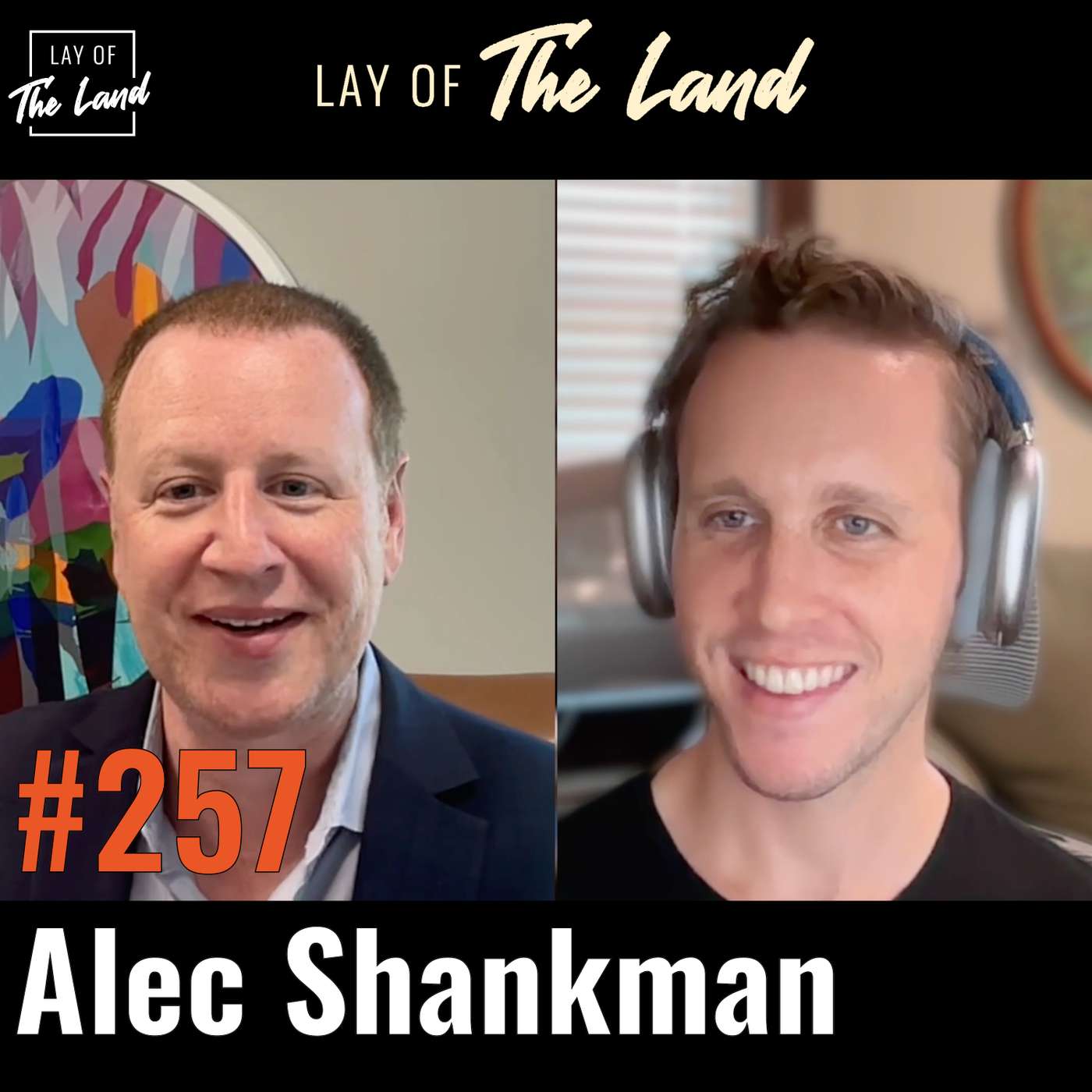
#257 Alec Shankman — HeartRock Partners

 Apple Podcasts
 Spotify
 YouTube
 Castro
 RSS Feed
 Alec Shankman is the founder of HeartRock Partners.
Alec has spent more than two decades at the forefront of entertainment, talent representation, reality television, digital media, podcasting, brand-building, and the creator economy. Before launching HeartRock, he was a Senior Partner at The Gersh Agency, following its acquisition of his division from A3 Artists Agency, where he built the Alternative Programming and Digital Media Division into a nine-figure 60-person bi-coastal team.
In our conversation, Alec and I explore his path from Cleveland to LA and back again, how he built new lanes in Hollywood by being early to unscripted TV, digital talent, and creator-led brands, and why he returned home to launch HeartRock. We also talk about the shifting power dynamics in media, why talent is increasingly becoming the network, what separates fleeting attention from durable enterprise value, why work ethic still matters the most, and why Cleveland’s strengths in entrepreneurship, manufacturing, consumer products, and community make it a compelling place to build this next chapter.
please enjoy my conversation with Alec Shankman.
00:00 Introduction and Alec's Cleveland roots
02:18 Alec's childhood exposure to entertainment
05:06 Seeds of a career in entertainment
06:45 Moving to LA and industry insights
09:59 Early waves of entertainment and Alec’s entrepreneurial approach
12:25 Leaving agency work to pursue entrepreneurship
14:54 Lessons from Hollywood and industry shifts
20:41 The evolution of media and talent representation
33:40 The vision behind HeartRock Partners
37:26 Why Cleveland? The geographic thesis
44:26 The creator economy and future opportunities
58:30 Looking ahead and Alec’s excitement for Cleveland
01:00:47 Closing thoughts and Alec’s advice for success
-----
LINKS:
https://www.linkedin.com/in/alecshankman
https://heartrockpartners.com/
-----
SPONSOR:
Cerity Partners
Cerity Partners, a full-service investment and wealth management firm serving high-net-worth individuals, entrepreneurs, and business owners, is proud to sponsor Lay of The Land. The firm has local roots in Cleveland and across Ohio, and like this podcast, Cerity Partners advisors specialize in serving the interests of local entrepreneurs and business leaders. The firm’s national presence means it can offer the resources and specialized knowledge of the largest institutions with the independence and service of a neighbor. The Cerity Partners Cleveland team understands the complexity that comes with wealth, and they adhere to fiduciary standards. Discover the financial lay of your land.
Learn more at https://ceritypartners.com/NPR or call 216-464-6266.
Roundstone Insurance
Roundstone Insurance is proud to sponsor Lay of The Land. Founder and CEO, Michael Schroeder, has committed full-year support for the podcast, recognizing its alignment with the company’s passion for entrepreneurship, innovation, and community leadership.Headquartered in Rocky River, Ohio, Roundstone was founded in 2005 with a vision to deliver better healthcare outcomes at a more affordable cost.
Over the past two decades, Roundstone has grown rapidly, creating nearly 200 jobs in Northeast Ohio. The company works closely with employers and benefits advisors to navigate the complexities of commercial health insurance and build custom plans that prioritize employee well-being over shareholder returns. By focusing on aligned incentives and better health outcomes, Roundstone is helping businesses save thousands in Per Employee Per Year healthcare costs. Roundstone Insurance — Built for entrepreneurs. Backed by innovation. Committed to Cleveland.
Learn more at https://roundstoneinsurance.com/
-----
Stay up to date by signing up for Lay of The Land's weekly newsletter — sign up here: https://layoftheland.ck.page/5f0c1e28fa
Connect with Jeffrey Stern on LinkedIn — https://www.linkedin.com/in/jeffreypstern/
Follow Lay of The Land on X @podlayoftheland
--
Stay up to date on all Cleveland Startup and Entrepreneurship stories by signing up for Lay of The Land's weekly newsletter — sign up here.
Alec Shankman [00:00:00]:
I was invited to Olivia Wilde's 21st birthday party. $40 donation to this cause that they were involved with at the door. I didn't have $40 cash. Like I was, I was living on credit cards at this point. But I remembered at that moment, I'm like, this is, I'm all in. And I took my DVDs and on my drive to Olivia's 21st birthday party, I sold my DVDs at a secondhand DVD store so that I could go to the party. And it was just, it was that type of mentality. I still live and die on that process.
Jeffrey Stern [00:00:32]:
Welcome to the Lay of the Land podcast, where we are exploring what people are building in Cleveland and throughout Northeast Ohio. I am your host, Jeffrey Stern, and today I had the real pleasure of speaking with Alec Shankman, founder of Heart Rock Partners, a talent and brand representation firm that operates at the intersection of consumer culture and the authentic relationship between celebrities and their fans. Alec has spent more than 2 decades at the forefront of entertainment. Before launching Heart Rock, he was a senior partner at the Gersh Agency. Following its acquisition of his division from A3 Artists Agency, where he built the alternative programming and digital media division into a $100 million top-line, 60-person bicoastal business. In our conversation, Alec and I explore his path from Cleveland to LA and back again, how he built new lanes in Hollywood by being early to trends that matter, like unscripted television, digital talent, and creator-led brands, And why he returned home to launch Hard Rock. We also talk about the shifting power dynamics in media, why talent is increasingly becoming the network, what separates fleeting attention from durable enterprise value, why work ethic still matters the most, and why Cleveland's strengths in entrepreneurship, manufacturing, consumer products, and community make it a compelling place to build this next chapter. Please enjoy this awesome conversation with Alex Shenkman.
Jeffrey Stern [00:01:55]:
Lay of the Land is brought to you and is proudly sponsored by Serity Partners. As a wealth management firm, Serity Partners shares Lay of the Land's same dedication to serving local business owners, and the Serity Partners Cleveland team understands the challenges that entrepreneurs and founders face here in Cleveland, Northeast Ohio, and beyond. Wealth comes with complexity and increased demands on time and resources. It is easy to become overwhelmed. Serity Partners clients benefit from a unified team of local specialists who coordinate across both business and personal needs. With Serity Partners' commitment to transparency and putting clients' needs first, complexity can become clarity. To learn more, please visit seritypartners.com or call 216-464-6266 today. Serity Partners, proud to be recognized as one of the top financial advisory firms In the country.
Jeffrey Stern [00:02:51]:
I was thinking, it's not often when we, we talk about Cleveland entrepreneurship that we also get to talk about media, culture, influencers, celebrities, these kinds of topics. And in a lot of ways, Heart Rock Partners feels to me like the culmination of your journey through entertainment, but in some ways, you know, like hearkens to your roots here. You had mentioned, you know, even as a kid growing up across the street from one of Cleveland's biggest celebrities at the time that you had sort of this expanded exposure to the world of television personalities, sets, you know, events, local fame. And I, I'm curious, when you look back on that, on that time now, did you know that this was the kind of work that you were meant to be doing?
Alec Shankman [00:03:39]:
I genuinely at the time had no idea what I was getting the benefit of experiencing, but I've been much more reflective as of late. And incidentally, a week or two ago, I actually went to the book release party for Little John, which it caused me to be deeply reflective on my childhood because as he was telling these stories about television and local studio and events and celebrity appearances, Because his son was such a close friend of mine and we were, we were neighbors, they took me to a lot of that. And, and I remembered all of it being wonderful at the time, the behind the scenes access to the circus, the, you know, the, the, the private events that the Cleveland Indians would do at the zoo and, and things like that. The visits with him to see his dad at work, which happened to be Fox 8 studio. It was all super cool and way different than what other people I knew growing up got to experience, but it definitely didn't, it didn't resonate with me at the time, or at least at that age as like what I was going to do for a career. It was just a really cool thing that I got to see because of my buddy's dad.
Jeffrey Stern [00:04:55]:
Yeah. It planted some seeds that have since sprouted.
Alec Shankman [00:04:59]:
That's right. But yeah, in retrospect, I'm like, wow, I did get access to some things that, to your point, Probably did plant some interesting seeds because I've, I feel really comfortable in this world and it, and I always have. And it does go back in retrospect to when I was 6 and first met that family and first started to kind of get to see the inner workings of entertainment. And I guess the whole time I really, I really loved it.
Jeffrey Stern [00:05:26]:
Yeah. To run with the seeds analogy, I mean, when you look back from Growing up here in Ohio, heading out to LA, building Hard Rock back here in Cleveland. What do you feel was the water and sunlight that gave life to the work that you're doing now? What's kind of the through line, you think, when you have done some of this reflection?
Alec Shankman [00:05:50]:
I think it's just working really hard and not ever letting it occur to me that failure is a is possible. And I know when I moved to Los Angeles with almost no money and definitely no connections and absolutely no meaningful history other than getting to kind of attend those events with my buddy's family, like I wasn't a Hollywood guy by any stretch of the imagination, but I also, it didn't occur to me that it wouldn't work out. And I was totally willing to And not just willing to, very much worked harder than anybody that I knew. And I showed up earlier and I stayed later and I worked really hard. And I've always done that and I've never gotten comfortable and I don't celebrate the mini victories. It's always, I just work really, really hard. And I think that's been my through line and it doesn't always work out exactly as planned, But it allows me to kind of, you know, be immersed enough that I can be nimble and I'm, and just make it happen in some way, shape, or form.
Jeffrey Stern [00:07:00]:
What drew you to LA?
Alec Shankman [00:07:03]:
When I was in college, I went to The Ohio State University. I was intrigued. I was becoming increasingly more intrigued by entertainment. And even then I still wasn't totally sure what that meant. And there was absolutely no meaningful tentacles into that Columbus. That was not really the setup. So I got involved in some startups actually in Columbus, Ohio at the time, and I was having a really great time, but it didn't feel yet to me like I had landed on what was going to be my career. So in 2003, I took a trip to LA with a group of friends and I Just kind of going into it, I called upon everybody that I possibly knew that may know somebody in Hollywood.
Alec Shankman [00:07:52]:
And I'm just like, is there anybody I can meet with this week just to understand what they do? And I was able to set a small handful of meetings. And upon leaving, I remembered thinking, I don't know, I don't totally understand what everybody's doing out here, but I know it sounds like a lot of fun. And I'm, I'm, I gotta give this a shot. And so that was a, that was, I think August or September of 2003. And by then I lived in LA.
Jeffrey Stern [00:08:21]:
When you got to LA, what did you learn quickly about how the whole industry of entertainment actually works relative to how you imagined it may have prior?
Alec Shankman [00:08:34]:
It seemed everybody knew somebody. Everybody had some sort of tentacles. There was certainly a fair bit of people who had family money that was kind of helping them get by at a time that none of us were making much money. But to that end, it was all just really new to me. It felt way different than growing up in Cleveland. The houses were fancy, the cars were fancy, everything was shiny. And that was the antithesis of Cleveland culture, especially kind of at that time. So it was all just new and different and really, really interesting.
Alec Shankman [00:09:12]:
Again, I wasn't totally sure how to wrap my mind around it yet, but I knew that I was willing to work as hard as possible to just make myself stand out and earn whatever it was that I can earn as a role for myself in that business. But it was wild. It was a big cultural change.
Jeffrey Stern [00:09:28]:
So I've heard you recount your career and the evolution of it So far, and it's a pretty awesome story, which I think we should tell here. But my observation reflecting on having you heard yourself go through it before was I feel you've sort of been like early to a few different waves in this world of entertainment, you know, from reality television to digital media creators, brand building generally, you know, where the puck is going, you know, to that kind of aphorism. Where does the entrepreneurial inclination kind of come into play for you when you kind of marry these worlds of entertainment and entrepreneurship and just how you've thought about where, where the puck is going also?
Alec Shankman [00:10:14]:
So for whatever reason, a lot of the jobs that I had in college, in high school, and even my first job in entertainment, they were always directly for an entrepreneur. I always worked for the guy that started the company. And I don't know that I was consciously seeking that out, but in retrospect, that was frankly the, that was the path. And even when I first graduated college in 2002, I did try to get jobs the traditional way. But what I ended up doing was partnering with a local, very successful young Columbus, Ohio-based entrepreneur. And we got involved in some ventures together. And then I got to LA and the guy that hired me was Harry Abrams, who was not only the founder of Abrams Artist Agency, but the founder of frankly several different Hollywood agencies. And so I think I spent so much of my life immersed in these environments with entrepreneurs that at some point, again, whether that was conscious or subconscious or just coincidental, I don't know.
Alec Shankman [00:11:23]:
But at some point, that way of thinking became just what was my default. And so even when I entered into the ecosystem at Abrams Artist Agency, it felt like I needed to find— I was at somebody else's company, it wasn't my company, but it felt like I needed to find my thing that I could do, that I could build, that I could nurture within the company. And I was very early on given the support of the founder of that company to do it. And so I just, I think ever since that's just been my default.
Jeffrey Stern [00:11:59]:
What then for the first time gave you the confidence to go out and do it for yourself?
Alec Shankman [00:12:06]:
I think so. I left, I was in the agency business from 2003 until 2009. And at the time, It was interesting because as you mentioned earlier, I had already by that point been involved in some really exciting early stage parts of both unscripted and digital. And so despite only being 29, I was just about to turn 30, so I was young. I had been an agent from the time that I was 10 months in on being in Los Angeles. That journey, which at the time typically took 3 at a minimum to 5, 6, 7 years at a maximum. Like, it was a longer journey for most. I had been an agent almost that entire time.
Alec Shankman [00:12:53]:
I'd built 2 different groups up during it. It felt like I had been doing it forever and I loved it, but it felt like that I'd been doing it a long time. So as I looked at what was about to be my 30th birthday and what was ahead, what the future was both for entertainment and for me personally, it just felt really important that I needed to take a big risk and just mix it up. And so 10 days before my 30th birthday, September 1st, 2009, I quit. And it was in retrospect stupid. Like, I mean, it worked out, but I had again, like pretty much no money in the bank. I was very gainfully employed at a wonderful company in a very high-profile role in 2 very quickly growing sectors of entertainment. And I just quit and it just felt like the right thing to do.
Alec Shankman [00:13:50]:
And I risked it all again. And it, you know, again, it took me on another, not totally linear journey, but, but one that brought me to where I am today. And I'm so glad I did it.
Jeffrey Stern [00:14:03]:
When, when you reflect on that kind of 6-year period within specifically the agency world, What were the most kind of powerful lessons that stick with you from that period of time? Just about people, relationships, deal-making, trends, problem-solving, you know, what just feels like it's still very strong within you?
Alec Shankman [00:14:24]:
So there's a few things. Harry Abrams at the time would've been every bit of 60 or more age-wise. And yet other than me, at the time, he was showing up first, leaving last, working really hard. And that resonated with me because he didn't have to. His name was on the door. Everybody worked for him. He didn't have to prove anything to anybody, but yet he worked hard because he loved it. And that was palpable to me, like that mentality, that just never stopping that part of it.
Alec Shankman [00:15:02]:
And so that resonated with me so early. And to this day, you know, 20-something years later for myself, I'm also first in every single day. It's just that, that was number one. Two was, and I love that man and he is my first and best mentor and like a father. He definitely also was, you know, very, very cost efficient and didn't want to spend extra money. Didn't want to, he was very careful with money. And so for me, at the early stages of my career, I had to decide whether I was going to let that determine my speed of success or whether that was going to be more incidental. And so I wasn't given early expense accounts of any note.
Alec Shankman [00:15:50]:
I wasn't given the ability to just go out there and spend other people's money to build. So I decided then too, financially, I was going to risk it. And I ended up using my credit cards. And by the way, I have a funny story even once where one of my first clients, he was this Italian prince, a guy named Tao Raspoli. And he had just married a gal that wasn't quite as famous as she is now, but he had just married Olivia Wilde. And I was invited to Olivia Wilde's 21st birthday party. And I got the email from Tao that said it was something like a $40 donation to this cause that they were involved with at the door to go to the birthday party. I didn't have $40 cash.
Alec Shankman [00:16:38]:
Like I was living on credit cards at this point and I was going, I needed to be wherever I needed to be. But I remembered at that moment, I'm like, this is, I'm all in. And I took my DVDs and on my drive to Olivia's 21st birthday party, I sold my DVDs at a secondhand DVD store so that I could go to the party. And it was just, it was that type of mentality.
Jeffrey Stern [00:16:59]:
Wow.
Alec Shankman [00:16:59]:
It was, don't be stupid, but just be where I need to be, however I need to be there and invest in myself, even with borrowed money if I had to. And I went all in on that investment. And third would be, and this goes back to a question you had asked earlier, I needed to find a path forward for myself that wasn't the same path that everyone else had already taken because everyone else had already taken it. And the success and the lines you had to wait in for that kind of similar success, that was well established. So for me, if I wanted to have a different path at a different speed, I needed to create a different map. And I still live and die on that process.
Jeffrey Stern [00:17:43]:
Yeah. Well, in that kind of Robert Frostian framing of it, what was the road less traveled that you paved for yourself? What did, why, I mean, you risked it for what? What did you see? What did you want to build?
Alec Shankman [00:17:58]:
So it felt, you know, when I looked at the traditional TV landscape in the early to mid-2000s, and you look at TV and film in particular, and everybody moving to Hollywood wanted to be a talent agent that represented TV and film stars. Like that was the path. For me, that was going to be a 6 or a 7-year path. And who knew? That just meant maybe I could become a baby agent at that point. To become a successful person in that space was going to be even longer, and it was going to be really hard to stand out. And so I needed to find something that was new, different, and unclaimed so that I could build, instead of trying to find my role in a skyline that was already very well established, I needed to build my own tower somewhere else. I needed to add to that skyline. And so in 2003, I started to kind of get the sense that unscripted television was kind of having an early, early moment.
Alec Shankman [00:18:50]:
And we had shows like The Simple Life with Paris Hilton and Nicole Richie that were coming off. We had Survivor, American Idol, and a handful of others. That was the year that Brian Seacrest was really kind of first introduced into the ecosystem. And it, the Osbournes were around, but it was early. No one really knew what it was. Cable TV was still kind of an earlier kind of business from a, how do we really monetize this? And that felt open. That felt like an open lane. No one was really doing that in my ecosystem.
Alec Shankman [00:19:23]:
And so I figured could not go anywhere. It's totally possible that that was going to be a fool's errand, but I was willing to try. I was willing to kind of see if I could prove that out. And just claim a lane that was unclaimed.
Jeffrey Stern [00:19:35]:
Lay of the Land is brought to you and is proudly sponsored by Roundstone Insurance, headquartered in Rocky River, Ohio. Roundstone shares Lay of the Land's same passion for bold ideas and lasting impact from our community's entrepreneurs, innovators, and leaders. Since 2005, Roundstone has pioneered a self-funded captive health insurance model that delivers robust savings for small and medium-sized businesses. They're part of the solution to rising healthcare costs, helping employers offer affordable, high-quality care while driving job creation and economic growth throughout Northeast Ohio. Like many of the voices featured on Lay of the Land, including Roundstone's founder and CEO, Mike Schroeder, Roundstone believes entrepreneurship, innovation, and community to be the cornerstones of progress. To learn more about how Roundstone is transforming employee health benefits by empowering employers to save thousands in per-employee, per-year healthcare costs, Please visit roundstoneinsurance.com. Roundstone Insurance, built for entrepreneurs, backed by innovation, committed to Cleveland. So I, I wanna obviously get to the, the work you're doing now, but help fill in the, the, the gaps from there of, you know, what, what were kind of the, the formative moments in your mind along the way that set the stage for, you know, this, this boomerang back, back home?
Alec Shankman [00:20:55]:
Yeah. So, so yeah, I mean, I'll, I will, I'll give you a sped up version of it and I'm happy to stop at any point, but so I launched our unscripted business then it was 2003, 2004. And at the time it felt like an interesting thing because you could then become famous without necessarily being an actor or a musician or an athlete, which was a Big deal.
Jeffrey Stern [00:21:22]:
Yeah.
Alec Shankman [00:21:23]:
And so I was building it and a few years later, all of a sudden Tila Tequila becomes famous from MySpace, which was an even bigger deal because here all of a sudden you have this gal that wasn't even on a television show. She ultimately later was, but at the time she literally became famous from a social media platform at a time where the word social media was still being fleshed out. I'm not even sure if that's what it was called In that moment. Yeah, that's 2006. And so I'm sitting here thinking, oh my God, like, you can, you can now become famous without even being in TV or film at all. And so I really started going down that path quite aggressively. And we were working with mobile phone carriers to provide talent for content. I mean, this is, this is the era we were in.
Alec Shankman [00:22:09]:
The content was preloaded onto your phone. This isn't like you can access YouTube and watch YouTube from your phone. Your Verizon phone came with preloaded video content and I was building deals to put people into that. And so we started building out, I started building out our digital ecosystem and again, it felt like another place to expand upon. And so I built that out as well, simultaneous to Unscripted for the next few years. Then in 2009, as I was about to turn 30, I felt like I just needed to really mix it up and understand technology and digital more. So I resigned from the agency. I launched a company with a guy from Columbus, Ohio, who was actually a partner of mine on some ventures when I had first graduated.
Alec Shankman [00:22:54]:
We launched a platform at the time called GotCast, which was—
Jeffrey Stern [00:22:58]:
Yep.
Alec Shankman [00:23:00]:
The whole premise was MySpace is pretty crowded with funny puppy videos and wedding videos and the such, but there are talent coming through. What if we created an ecosystem where just the talent could be discovered. And so we built that out, raised some capital, got that going over the next few years. And ultimately we sold that off to one of the firms that had invested in us early on. But as that was unfolding, I still had a toe dipped pretty extensively in the unscripted world, and I was helping a couple of folks get their shows underway. And so in that era, and as we lead into 2012, when ultimately we exited out of Godcast. I was involved in the show Gold Rush, which at the time was the number one show on Discovery Channel and one of the biggest shows in cable. And then I brokered the deal for the Robertson family to kick off Duck Dynasty at A&E, which very quickly became the most successful cable TV show effectively ever.
Alec Shankman [00:23:58]:
And so I just got sucked full speed back into the ecosystem of television representation, talent representation, and beyond. And at that point, years after I had already kind of started both digital and unscripted, they were becoming more mature. It was now possible to make meaningful money as a digital content creator.
Jeffrey Stern [00:24:18]:
Yeah.
Alec Shankman [00:24:19]:
It was possible to make money in the unscripted space like it had never been. And so I just started building those back up. And I also, because I had just come out of the startup ecosystem, spoke both languages. I understood tech, I understood startups, I understood helping brands better leverage Hollywood. And so I started becoming engaged by a lot of local startups in the Santa Monica, at the time it was the early stages of Silicon Beach community to help me kind of maneuver the black box of Hollywood and do some strategic dealmaking to leverage celebrity and scale. And so got back into the business. I built my agency world from then 2012, where I also started building out our podcasting business. until 2018.
Alec Shankman [00:25:04]:
And, you know, I ended up back at Abrams Artist Agency. My team kept growing, team kept building, company sold. My team kept growing, kept building. And at that point we were called A3 Artist Agency. And, you know, to kind of get to the root of your question, which is how did I initially end up back in Cleveland? COVID hits and we weren't going to the office. I had at that point, 2 little children, my wife, we had this family and Los Angeles, but my family wasn't in LA. Her family wasn't. We ended up sitting at home for 2 years, like 2 entire years.
Alec Shankman [00:25:35]:
And we just needed to find a way to end up back closer to some of our family because that just felt like a colossal waste of family time. So where we, our kids needed to meet their grandparents and spend time in nice environments and so on. So I moved back to Cleveland at the top of June '23. I was plan was to bounce back and forth between LA, New York, and Cleveland. This double, triple strike in Hollywood hits 30 days before I got back to Cleveland. Most of the industry went on strike. The owner of our agency put our company for sale. And as it turned out, the only division of it that sold was my division.
Alec Shankman [00:26:14]:
And so my group, there was over 60 of us at that point, covered unscripted, digital podcasting, brand representation. We sold to a larger agency. I spent the next couple of years working on that transition and bringing everything over there, getting everything to be smooth. A lot of time in New York, going back and forth between Cleveland and New York every other week. And at the end of that 2-year journey, I just, to me, it felt like the right time, especially in the ecosystem of Cleveland where I've just completely captivated by the entrepreneurial spirit and the opportunity here and the community here and the support to just build. And so I left December 31st, was my last day, kicked off HeartRock January 1st. And yeah, it's been a 6-month journey since, but it's awesome. No, it's super cool.
Jeffrey Stern [00:27:07]:
And certainly excited to talk more about that. I think it'll be an interesting framing and context to lead into it, but As I was thinking about your journey and this conversation that we're having now, I did want to ask you just about how this whole space has evolved over the last few years, because it's pretty drastic. And there are a few topics that I was kind of noodling on that I think would be fun to get your perspective on.
Alec Shankman [00:27:33]:
Would love that.
Jeffrey Stern [00:27:34]:
But I feel like, you know, over that duration of time, call it, you know, the early 2000s to today, we've kind of Evolved from, you could frame it as the old media game where I feel like it's staying on message, it's getting access to other people's distribution. And that has very clearly transitioned to a place where it's really about how do you go direct? How do you be interesting? How do you build your own channels and distribution? And I think it's probably fascinating from the agency standpoint when you're thinking about representing people, like What does that even mean to represent people today and how has that changed?
Alec Shankman [00:28:14]:
So the way it used to work for a very long period of time was that the leverage was entirely held by the networks and the studios because they controlled the audience. And so at a peak era of there being 400 cable channels and the broadcast networks and movie studios and movie theaters being able to kind of just Demand eyeballs, command eyeballs. They controlled it. As talent, you just wanted in on that. If they gave you a half hour or an hour slot or a part of a distribution calendar for a film, you were guaranteed access to this many households, this many eyeballs, and they got to call the shots. They got to dictate the terms. They got to own and control everything. And they paid you what they felt you deserved and nothing more.
Alec Shankman [00:29:07]:
And so they were the, it was the man, right? And you worked for them.
Jeffrey Stern [00:29:11]:
Yeah, it was the man.
Alec Shankman [00:29:12]:
That's changed almost entirely. And so the cable TV ecosystem over that same stretch of time has effectively imploded, you know, the, the, that ecosystem of having hundreds of channels, each with their own budget for original programming, chasing eyeballs for certain hours of the day, certain days of the week, and getting carriage fees on top of that from the cable carrier. That's over.
Jeffrey Stern [00:29:39]:
Yeah.
Alec Shankman [00:29:40]:
And so now the people with the eyeballs are the talent, and the talent can build those communities on social media platforms, digital platforms, podcasting platforms, any number of places. But, but they control, they're the network now, the talent are the network.
Jeffrey Stern [00:29:57]:
Yeah.
Alec Shankman [00:29:58]:
And the brands at the end of the day that have always been funding all of this through commercials or otherwise, the brands just go where the people are. And so now the talent can, can kind of engage with the brands directly and the brands will fund the content because they still have widgets and gadgets to sell. And the control is, is now in the talent's arms. And so for us as advisors to the talent, And to the storytellers and the content creators, it's really exciting because we're getting to advise the person that now owns, controls, creates, stars in like all of it versus, you know, bits and pieces of it.
Jeffrey Stern [00:30:37]:
Right. That does feel like the main corollary of all of it, which is that the brands, the most important ones are the people now. And that all of that is accruing. You know, the trust, the attention, the, even like the commerce, the distribution to individuals rather than institutions.
Alec Shankman [00:30:58]:
That's right. And so that transition of power is the single biggest thing. And the audiences are still there. I mean, there's more people than ever. There's more devices upon which to consume content than ever. There's more content than ever. There's more brands than ever. Like all of those things are true.
Alec Shankman [00:31:16]:
The, but the control and the power has shifted.
Jeffrey Stern [00:31:20]:
Yeah. Well, and maybe that's a good way to introduce, you know, Heart Rock and how you're thinking about, you know, what the model even looks like and is and how you are putting yourself out there, how it's evolved, just what the whole vision is.
Alec Shankman [00:31:35]:
Yeah. So, you know, what I found over the course of that run of, you know, 20-something years out in Hollywood was that after working with so many different types of folks across the unscripted digital brand and podcast ecosystem, those that I was always most drawn to and those where we ended up having the most success and the longest partnerships always tended to be the most entrepreneurial talent and/or storytellers themselves. And I've always had, even in many years where I wasn't the company owner myself, which has been frankly most of my career, I've always had the entrepreneurial spirit and my clients that similarly have the entrepreneurial spirit like that, those opportunities where we just created magic, where we built in many cases generational wealth or really robust and dynamic enterprises together. So as I look to what was next, as I look to kind of where the business is going, where the money is going to be made, And just as much where it's not going to be made. That era of $20 million a movie for household name stars, like that's over. The era of massive renegotiations because the Nielsen ratings tell you that your cable TV show is top of the pack for the 8 o'clock hour on a Tuesday night, like that's over and so on and so forth. So look to kind of where the money is made and will be made and You know, it all really kind of centered at consumers, brands, consumer products, talent, and storytellers. Like that intersection is where I've had the most fun and where I know we're going to have the most success and the most fun.
Alec Shankman [00:33:15]:
And so the premise behind Heart Rock, which gets its name from the idea that we are rooted in the heartland and based in the city of rock and roll, was we're going to go after talent and storytellers that are also entrepreneurs. And we're going to go after brands and events that are kind of entrepreneurial in spirit and/or entrepreneurs and work with them as our partners and as our clients and leverage what we have and our relationships and our board of advisors and our investors and everybody that I've intentionally kind of baked into this ecosystem. to help people build their enterprises by leveraging talent, by leveraging platform, but using it in the most authentic and organic of ways to build enterprise.
Jeffrey Stern [00:34:06]:
That's awesome.
Alec Shankman [00:34:08]:
Thank you.
Jeffrey Stern [00:34:09]:
How's it going so far?
Alec Shankman [00:34:11]:
So far, it's honestly, it's amazing. You know, I think we've been, it's been really well received by the entertainment community. It's been really well received by the talent community. This isn't a scenario where, you know, I'm out there saying, hey, here's what we want to do for you. And we think we can, it's more, here's what we have done. I've been doing this a long time and here's what we will do for you. And here's how, and we are, we are doing it. And the folks that very quickly jumped in to support this business from an investment standpoint stem heavily from backgrounds in manufacturing, from consumer products and from retail.
Alec Shankman [00:34:48]:
And so when we have a client that wants to launch an X, Y, and Z type business, it's not me just pounding the pavement trying to figure out in real time how to make that happen. It's me taking my experience, my team's experience, and the brain trust of this really amazing group of people that have backed this play and bringing these things to life. And it's same for our board. Our board consists of folks that come from similar areas as well as some really successful folks from the traditional entertainment ecosystem and the new and evolving entertainment ecosystem. And it's the same thing. Like we have such a wonderful brain trust. And so in just this short period of time, again, we've only been around 5 or 6 months at this point. We've been able to not only put together a wide variety of fantastic revenue providing deals for our clients in the traditional sense, but we're launching consumer products across major retailers from grocery stores to sporting goods stores to big box stores to premium retail outlets for fashion.
Alec Shankman [00:35:53]:
Like we have so many different initiatives underway that are living, breathing embodiments of what we stand for that honestly, it's been awesome. So we've been building the team as quickly as I can so we kind of keep supporting it. We have dozens of brands that have come aboard as clients of ours that really run the gamut and we're helping with strategy and business development and talent partnerships. And we have dozens and dozens of really incredible creators, celebrities, personalities, athletes that we're helping and kind of building upon. And so, yeah, so far, I know that's a long answer to a short question, but so far, So good, which I'm excited about.
Jeffrey Stern [00:36:35]:
You had mentioned the opportunity that you felt is present here in Cleveland and as part of the answer to why build this in Cleveland, how would you articulate what the geographic thesis is around building it here? I mean, is the idea that you can have talent rather than assuming it has to all be in LA or just like, how are you thinking about the geography?
Alec Shankman [00:36:58]:
So it started initially with kind of the entrepreneurial spirit, which transparently wasn't on my radar when I first came back. I came back because it was a barely post-COVID era and my children just needed grass, grandparents and cousins and great schools and things that like we just needed to relocate to accomplish, especially in an era where we were kind of sitting home alone. But upon getting back and doing a deep dive into Cleveland history that transparently I hadn't done as a child growing up in Cleveland and really starting to understand that this is an area that produced 65 of the first 100 millionaires in America. This was an era that like some of the most, an area where some of the most kind of unbelievable companies ever came from and still are, you know, these 100-plus-year-old brands, these Sherwin-Williams and these you know, mega brands. And as I, as I started kind of getting integrated back into the community and, and really wrapping my mind around that entrepreneurial spirit and, and the, the support of the investors and the interest in new businesses and ventures, and then further kind of getting to understand quite how many manufacturers are out here in so many different industries and experts in so many different lanes. That was where it really started to quickly come together is, you know, I have clients all over the country who have unbelievable followings and they're looking to launch a coffee business or a cosmetics business or an apparel business or a widget or a gadget or whatever the case might be. And all of a sudden I'm realizing, well, the people that make all of these things and the places that they're all made are within like 30 miles of where I'm sitting. And these are folks that have massive warehouses and mega teams and the ability to ship and fulfill an incredible 3PL facility.
Alec Shankman [00:38:52]:
Like there's so much here. You don't get that in LA. You don't get that in New York. Space is at such a premium that just those things don't exist, but they're here. And so when I started bringing celebrity clients of mine to town initially, like, you know, I brought some of the Robertsons from Duck Dynasty up here for the Rock and Roll Hall of Fame induction ceremony in I probably what would have been 24. I got to do back that math, but yeah. Which by the way, was one of the most unbelievable live experiences that I've ever been to after 20 years of LA, that Cleveland-based induction ceremony was incredible. And even just them coming up here to hang out with me and go to that event with me, we've put together multiple partnerships where they're going to be launching new businesses and brands with people that they met on that trip with manufacturers and companies that are based here.
Alec Shankman [00:39:46]:
that wasn't even planned at all. In fact, if you go to any Fount store in Cleveland, Ohio, as we speak, Fount's a wonderful local brand, you can buy a bag called the Corey, which is a collaboration between Corey Robertson and Jackie Wachter, who founded Fount. And it's an unbelievable bag. I mean, it's just, it's the coolest collaboration that just came out of this trip of them coming up and meeting each other. And so, I think when you start to introduce that level of marketing and that level of celebrity and reach and authentic audience connectivity to the amazing entrepreneurs and builders and manufacturers that are here, sky's the limit. I mean, it's, it's, it's really remarkable.
Jeffrey Stern [00:40:31]:
When you think about this ingredient within the creator community that you're looking for, this entrepreneurialism within folks, what have you found sort of separates a creator who can monetize for building something durable versus just like a moment, you know, and it, right? Like just like what you've seen there.
Alec Shankman [00:40:56]:
Yeah. I mean, I think there's certainly no lack of flash in the pan creators and celebrities. I feel like there's 3 levels. So there's the flash in the pans where people will come out and they'll have a moment. Maybe they're a contestant on a reality show that has a really great rating that season. Maybe they've gone viral for one reason or not. For example, not to be crass, but like the Hokkaido girl, right? There's this moment where the entire world is watching and that happens and you have your moment and you maximize it and then the world moves on. There are then folks that find an opportunity and they are Superstars for an extended period of time.
Alec Shankman [00:41:37]:
Maybe it's because of a TV show. Maybe it's because of a YouTube channel. Maybe it's because of a film or a series of films, whatever it is. They thoroughly kind of maximize that moment in time or that extended period of time, but they don't turn it into enterprise. They take more of a traditional approach to it. And then when that moment ends, the show's over, the film's over, the trilogy has moved on, the whatever the case might be, things fade. And then I'd say kind of like level 3 is folks that are coming out of that world of level 2. They've had an amazing show.
Alec Shankman [00:42:14]:
They have an amazing social media platform, but they're also entrepreneurial in spirit and they have the ability to understand that as long as they're authentic and genuine and their connection with their audience is real, that if they don't steer their audience the wrong way, they don't take advantage of their audience, but rather they just kind of introduce them to more aspects of their life and build value-add businesses around it. These folks can build generational wealth and unbelievable enterprises around it. And everybody is happy about it. Like you look at a MrBeast who has built a multi-billion dollar enterprise that offers everything from snacks to fintech. And no one looks at him and says he's being exploitative because he's doing it for the right reasons. To make his audience get access to things that he genuinely believes and feels it'll make their lives better. And he's built an unbelievable ecosystem over it off of what could have otherwise just been an awesome YouTube channel. But because he's entrepreneurial in spirit, he has built it an enterprise.
Alec Shankman [00:43:17]:
And so Heart Rock exists effectively at level 3, right? Like we look for people that either are in level 2, then capable and interested in expanding into the enterprise components of their life, but haven't had the right partner to do it or are already there and are looking to scale. And we become that partner that helps them scale.
Jeffrey Stern [00:43:40]:
What do you think is the requisite ingredient for someone to go from level 2 to level 3?
Alec Shankman [00:43:46]:
It's in their soul. And some of my favorite clients over the years, people that I, we had, have had amazing runs, or, you know, I might've worked with them 5, 10 years, et cetera, made a lot of money together. And hopefully I gave them just the best advice that I could and so on. That was all they ever wanted to do. And that was totally okay. They wanted to do that thing. And we made sure that they maximized the value of that thing and we'd introduce other opportunities and those would categorically be dismissed. And/or kind of punted on, but it just, it wasn't in their soul to do those other things.
Alec Shankman [00:44:21]:
They just, they wanted to focus on what they wanted to focus on. And that was it. When it's in your soul, when you genuinely want to expand, to launch businesses, to introduce new products into the world, it doesn't mean you're going to succeed. And if you don't do it with the right spirit and with the right intention, you probably won't. Especially if you're leveraging your own celebrity fan base, if you're trying to sell stuff that you're authentically not able to stand behind, honestly, it's probably not going to work out. But if you have that in your soul and in your spirit, and you are the type that wants to be more enterprising and you want to leverage your craft, your art, your platform into business as well, as long as you don't steer your audience wrong, there's an amazing opportunity. And that it really, it's that It's that innate soul and passion.
Jeffrey Stern [00:45:11]:
So this, it's sort of, in my mind, runs parallel to what I feel is happening with AI, which is just the rate and pace of change is so fast that it's hard to just kind of keep up with it, frankly. And it's overwhelming. And I feel the pace of what has happened and is still transpiring in the creator economy is at a similar clip. Like all of this, I mean, if you took someone 10 years ago and then, you know, they were in a coma and they woke up today, it's like really different, right? And so I'm curious from where you sit, having been and continue to be at the frontier of where this is going, like what do you think people are fundamentally misunderstanding about the creator economy today and where it's going?
Alec Shankman [00:45:59]:
I mean, I think you genuinely just have to accept change. I think I've had the benefit of frankly starting this business at a time that it was based on platforms that literally don't even exist anymore. Like, I mean, my first deals, Verizon Vcast and MySpace and other social networks that just are gone. And I've seen the evolution of platforms, even like Vine, where it's the hottest thing in the world and it's over. Or we've, you know, I was brokering deals when Musical.ly was transitioning to TikTok. And they were paying my clients massive sums of money to move back over to Musical.ly to help TikTok launch with, like, I've seen all of that. We've seen the evolution of long form back to short form, back to long form. And so from my perspective, you can't go all in lifelong goal on any one platform.
Alec Shankman [00:46:53]:
You have to be nimble. You have to understand that the platforms are going to evolve. The way that they're kind of leveraged and ranked and optimized or used by different brands is going to evolve. Your algorithm treatment on the platform is going to evolve. You have to be a great storyteller. You have to be authentic. You have to find connective tissue with your audience and keep feeding them things that they expect and enjoy and appreciate. And you have to find ways to build upon that, but you can't get so caught up on any one platform or any one way of doing that.
Alec Shankman [00:47:26]:
Same thing with cable, right? Like it was hard to imagine 10, 15, years ago, the cable TV of all things was going to no longer be like the primary driver. And that all of a sudden these streamers were going to be kind of the biggest content platform buyer out there. But it just is what it is. It doesn't change the fact that these are still great storytellers, but it did put a lot of the storytellers that built their entire businesses on cable out of business. Those that didn't adapt, that didn't find ways to get creative in how content was funded, how it was distributed, how it was monetized. If you weren't able to be nimble, you're gone. And the folks that were, they're selling great content and making money in new ways. Same thing for creators.
Alec Shankman [00:48:09]:
But also one other thing I'll add is that what I do find is that when I first started our digital representation business back in 2006, there was almost nobody doing it. And so the competition was light at this point. There's well over 100 different firms offering this service and everybody's had to grow and scale so quickly that whereas in the old days, you'd have a longer period of time to learn as a representative, how to offer value-add service versus just simply kind of being a transaction farm and you're taking inbound offers and making them a little better and then commissioning out of it. Most of the reps out there haven't had the benefit of training or experience to kind of be meaningfully value-additive to their own clients. And so there are a lot of great creators out there that should be bigger, should be better, should have more enterprise, but because they're not necessarily well represented, that's also kind of a problem. And we're also trying to fix that as well.
Jeffrey Stern [00:49:09]:
Yeah. Another sort of market-oriented question. I mean, I feel like in all industries there's that old Barksdale quote of, you know, there's 2 ways you can make money, bundling and unbundling. And I feel like in the creator economy right now, it's like one of the greatest unbundlings of all time. But I think it sort of makes discoverability harder in a lot of ways, because now you have, you know, thousands and thousands of people trying to build their own brand and do it authentically and get to scale. That is what a platform ultimately, you know, kind of helps you do. which is, you know, maybe when the pendulum swings back, what might happen. But do you kind of see HeartRock as like a mechanism to help? I'm just curious how you think about that dynamic.
Alec Shankman [00:49:51]:
Yeah, I mean, I think our job is to be kind of the forward-thinking eyes of our clients and just to kind of keep an eye of what is happening out there. And if we're starting to just see, because we get the benefit of sitting across a wide variety of creators who work across a wide variety of platforms, platforms. We work across all of the brands spending money in the ecosystem. We work across all of the retailers that are carrying consumer products that are tied to celebrity. So we, because we get to kind of, as long as you follow the patterns and read the room a little bit, we can start to see if major changes are happening or even subtle changes are happening in what brands want, what retailers want, what content is working and what isn't. And we, it's our job to relay that to our clients so that they're not caught off guard. They can't wake up one day and say, oh my God, this social platform where I built my entire career is now irrelevant. Why did no one tell me that was happening? That won't happen here.
Alec Shankman [00:50:48]:
We will be as forward with that information as we can be. And it is our job to give that best advice and to help people leverage the available information to make the most amount of money. And the best decisions possible.
Jeffrey Stern [00:51:01]:
What does success mean to you?
Alec Shankman [00:51:04]:
In the context of HeartRock or in general?
Jeffrey Stern [00:51:08]:
Yeah. Yes.
Alec Shankman [00:51:09]:
And I think, you know, for HeartRock, I really just genuinely want to be the place that any entrepreneurial-minded talent or brand can come know that you're going to be well represented and we will be successful in carrying out what we say we'll carry out. If you're a talent or storyteller, hopefully your business, your day job will be better by working with us. And hopefully your expansion into enterprise and business will be better and more robust because you're working with us. If you're a brand or you're an event, same, like, I hope that by working with us, that your world has expanded, your access to things, money, sponsors, partners, talent, whatever the case might be that are in your priority list. I hope that we make that better. And if that is true across all of our clients, we're successful. We've done what we set out to do. And I think in general, on behalf of any given client, that does vary because some clients just want to sell a lot of widgets and some want to become more famous and some want to do both.
Alec Shankman [00:52:14]:
Some want to build a brand that can exist outside of them and Some want to have an exit. Some want to build a generational company. Like each client of ours has a different mission and it's also our job to genuinely process that and to understand it and to make that mission come to life as best we can. And if, again, in each client's case, if we help make it any bit better, it's a success.
Jeffrey Stern [00:52:38]:
Sort of a philosophical question, but what you mentioned just brought it to mind. I mean, there's sort of the power triad of money, fame, and power. And I'm curious, you know, what you see as the underlying motivator for more people. And I, cause I feel like a lot of people might assume it's money, but it's—
Alec Shankman [00:52:58]:
So here's what's, here's what's funny. And I say this as a 25-year-old or 25-year veteran in representing talent. If you're not already famous and you're debating whether or not you want to be, my advice is don't be like, don't do it. It, there are so many things. There's so many unexpected kind of issues, challenges, trials, tribulations that come about with fame that people can't really wrap their minds around. And it sounds awesome. And a lot of people that we work with make the best of it and it can be awesome, but it can also just be a total nightmare. So we come across people all the time that have money.
Alec Shankman [00:53:39]:
They've made all sorts of money in all sorts of ways. And the thing they can't buy necessarily is fame. So to them, my advice is don't buy it. Like, you've done it, you've succeeded, you've made it, just like keep rolling. But I think, you know, they can be leveraged together in the best of ways. If you have fame and you you leverage it the right way, again, you're kind, you're authentic, you treat your fans with respect, you will make money. And there's any number of ways that that will happen. Fame doesn't equal money.
Alec Shankman [00:54:19]:
And unfortunately, that's one of the downsides. And so you'll see these celebrities sitting in coach class on an airplane getting mocked on social media because there's this general assumption that if you're famous, you're rich. And that's a lot of pressure. But those aren't the same thing. Fame and money are different. It's a lot more convenient to be famous if you're also rich. It can be really stressful to be famous if you're not also rich. You've lost your privacy.
Alec Shankman [00:54:45]:
You've lost a lot of the things that are luxuries to you and I because people are photographing every moment of your life. You can't just go to the grocery store and so on. But I think fame, if you use it the right way, You can make a lot of money with it and they can go very much hand in hand and money, you know, you can, you can make it without fame. You can make a lot of money without fame. And if you can keep making money without fame, it'll probably eliminate some of the stress. But for certain folks, there's a way to leverage money for fame. And you can all of a sudden start buying all of the things that make you grow on social media, or you can appear on a TV show or a film or whatever the case might be, the kind of builds you up and all of a sudden kind of balances that platform. There's a lot of really quiet, stealthy billionaires.
Alec Shankman [00:55:33]:
And then there's Ellison and Cuban and Trump and folks like that that have, you know, taken a different approach and who's to say what's right or wrong. You know, Elon Musk is both the first trillionaire and one of the most famous people on the planet. And he's kind of been doing both hand in hand. But I think you just, you have to be thoughtful. especially as it relates to those 2. What was the 3rd? Fame, money, power.
Jeffrey Stern [00:55:58]:
Power.
Alec Shankman [00:55:59]:
Okay. So, I mean, power is an interesting one because, you know, it used to almost be that in the power, in the world of fame, the power was held by studios. It was held by the networks. It was held by the people funding the content. That's been an enormous shift. And so the fame in this day and age, if you're doing it right, and if you're publishing your own content and you're kind of leveraging all of the democratization of tools and platforms that are out there, you can have both. You can have the power and you can have the fame. And I think that's the best advice we give our clients is claw back as much of that power as you can, because if you have the power and the fame, the money certainly follows.
Alec Shankman [00:56:41]:
But each person's a little bit different and each person has a little bit of a different I suppose hierarchy of those 3. And it's our job to just help them maneuver to kind of accomplish which of the 3 in which order is most important.
Jeffrey Stern [00:56:54]:
What are you most excited about looking ahead?
Alec Shankman [00:56:56]:
I'm really excited to be back. I love that I'm raising my family in Cleveland. My wife grew up in Sonoma County and she's, she's, this is a far cry from Sonoma County, but she loves it. My kids are having a wonderful childhood and great schools and meeting great people. Like, I love that. I love that I'm getting to leverage decades of learnings in entertainment that I did it the hard way. I went out there and I, with knowing no one and having nothing, built it from scratch at these companies that I was fortunate to get hired at. But I love that I get to bring it back here.
Alec Shankman [00:57:33]:
Future generations of me's, that they don't have to do that anymore. You can be born in Cleveland and stay in Cleveland. And be meaningfully involved in this ecosystem. Like, I love that. I love that entertainment is evolving in creating chaos. And I love the opportunity that is created by that chaos. And I love that we get to be, you know, a partner to people that are willing to roll up sleeves and, you know, pursue that opportunity in the chaos. Like, I'm excited about all of those things.
Alec Shankman [00:58:03]:
I'm excited about the early success we've seen as a company and the wonderful people that have come to work here. You know, they took a big leap of faith. These are folks that really, the company was a, was a, was a PowerPoint deck and, and, you know, me and they, they took a leap of faith to come here from some really gainfully employed roles. And it's the, this team has been wonderful. I'm excited about that. You know, it just right now I'm, I'm, I'm excited in general. I feel really good about it.
Jeffrey Stern [00:58:32]:
Well, we're, we're excited to have you back.
Alec Shankman [00:58:35]:
And by the way, I'm excited about what you're doing for the entrepreneurial community. I think, you know, the unification of the community that you are doing with your podcasts and your events and your networking is remarkable. And, you know, as a now new entrepreneur in this ecosystem, I just, I think it's awesome. I think what you're doing is awesome.
Jeffrey Stern [00:58:58]:
Well, thank you. That means a lot for sure. That's the best I could hope for.
Alec Shankman [00:59:02]:
It's a big deal.
Jeffrey Stern [00:59:04]:
So I'm sure there's an abundance of things that we sort of glossed over here in the short reflection of your journey. Is there something that feels particularly important that you wish we had talked about?
Alec Shankman [00:59:18]:
That's a good question. And off the top of my mind, not necessarily, but I would say like, you know, a lot of times I do get the question, not from an interview, but just from people in general, like what's the what did I do to succeed and what should they do to succeed, especially in the context of entertainment? And what I often say is like, I think growing up in the Midwest and having Midwest values and this whole premise of showing up early, staying late, and meaningfully leaning in, which you don't have to be from the Midwest to do those things. Those are really simple. Show up early, stay late, lean in. People don't do that. And it's the best advice that I can give anybody. It's those 3 things that I've done my entire career. That's at every turn, whether I was lucky or not to stumble into reality TV or digital, whether, whatever you want to call it, show up early, stay late, lean in, do those things.
Alec Shankman [01:00:13]:
And honestly, like the sky's the limit and it's for some reason the easiest advice and the hardest advice to follow, but I just, I want to put that out there.
Jeffrey Stern [01:00:23]:
Yeah. Often the simple advice is the most difficult.
Alec Shankman [01:00:26]:
But yeah, I mean, and I think otherwise I just want to be a resource here as well that anybody within this community that's looking to kind of engage with or interact with entertainment or Hollywood celebrity, et cetera, in any capacity, like we're here for it. I'm so happy to be back. So happy to be doing this here. I'm so impressed by the remarkable kind of local entrepreneurial community. And I just, I want to be, you know, a resource and a partner, however we possibly can be.
Jeffrey Stern [01:00:52]:
Amazing. Well, I'll, I'll Hit you with our traditional closing question then, which is for a hidden gem in Cleveland.
Alec Shankman [01:01:04]:
Wow. Well, I mean, here's what I'll say. I grew up in Solon and my bubble growing up there was really, really small. I lived like my entire life within the Chagrin Falls, Pepper Pike, Twinsburg, Solon, Beachwood ecosystem. I would say that Lake County, where I live now, was not on my radar At all. The village in which I live, Wade Hill, was not on my radar at all. And I think coming back and getting immersed into this part of Cleveland where there's so much space and nature and trees and just all of these wonderful people and multi-generational entrepreneurs, I would say a hidden gem for me upon my return has been Wade Hill and Lake County. And I'm just so happy that I have kind of come across it in a way that it I don't know.
Alec Shankman [01:01:50]:
I could have never expected or predicted.
Jeffrey Stern [01:01:52]:
It's, yeah, you've come back with a wider aperture.
Alec Shankman [01:01:56]:
That's right. I, when our realtor first said, have you looked at Wade Hill? I literally, I was like, I have no idea what you're talking about.
Jeffrey Stern [01:02:03]:
Wow. Very cool. Well, if people had anything they wanted to learn more about HeartRock, follow up, where would you point them?
Alec Shankman [01:02:11]:
heartrockpartners.com. We just launched the new iteration of our website this week. So that's hopefully a helpful start. And you can feel free to email me as well. There's an email address on the website, but I, it's forwarded to me. So please check us out, reach out. I want to meet everybody. I want to be the best partner that we can be.
Alec Shankman [01:02:34]:
I'm here for it. I'm happy to be back and I'm just, I'm excited for what's ahead.
Jeffrey Stern [01:02:39]:
Yeah, right on. Well, Alec, I just want to Thank you for taking the time and love what you're building and excited to see it come to fruition.
Alec Shankman [01:02:49]:
Thank you. This is awesome. I appreciate it. I appreciate you. Thank you for what you're building. And I just, it means a lot you included me.
Jeffrey Stern [01:02:57]:
Thank you. That's all for this week. Thank you for listening. We'd love to hear your thoughts on today's show. So if you have any feedback, please send an email to jeffrey@layoftheland.fm or find us on Twitter @PodLayofTheLand or @SternFA, J-E-F-E. If you or someone you know would make a good guest for our show, please reach out as well and let us know. And if you enjoy the podcast, please subscribe and leave a review on iTunes or on your preferred podcast player. Your support goes a long way to help us spread the word and continue to bring the Cleveland founders and builders we love having on.
Jeffrey Stern [01:03:33]:
We'll be back here next week at the same time to map more of the land. The Lay of the Land podcast was developed in collaboration with The Up Company LLC. At the time of this recording, unless otherwise indicated, we do not own equity or other financial interests in the company which appear on this show. All opinions expressed by podcast participants are solely their own and do not reflect the opinions of any entity which employs us. This podcast is is for informational purposes only and should not be relied upon as a basis for investment decisions. Thank you for listening, and we'll talk to you next week.