Why Vertical Integration Is Winning in American Bus Manufacturing
Vertical integration in American bus manufacturing is shifting from an old-school industrial strategy to a modern survival mechanism for electric vehicle builders. By bringing vehicle design, powertrain development, and final assembly in-house, specialty manufacturers are successfully eliminating supply chain bottlenecks, lowering production costs, and solving the complex reliability challenges that plagued asset-light EV startups over the last decade.
Key Takeaways
- Vertical integration gives vehicle builders complete control over quality, costs, and customer service by eliminating reliance on external subcontractors and legacy metal-benders.
- Sourcing parts from fragmented global suppliers often results in finger-pointing when components fail, making in-house manufacturing essential for complex EV deployments.
- Scaling from a low-volume operation to thousands of units requires doubling initial capital estimates and maintaining a laser-like focus on repeatable, well-documented production processes.
- Investing heavily in local workforce development and promoting skilled talent from within bridges the gap between old-school industrial manufacturing and modern clean tech.
- Midwest manufacturing hubs like Ottawa, Ohio offer significant cost-of-living and workforce advantages that make large-scale automotive production economically viable.
The Fallacy of the Asset-Light Model in EV Manufacturing
For years, the tech-infused startup playbook preached asset-light efficiency. Software companies outsourced hosting, hardware startups outsourced fabrication, and EV companies tried to outsource everything from chassis design to powertrain integration. In the specialty vehicle market—building buses for airports, school districts, and transit agencies—this model quickly proved to be a recipe for disaster.
When an airport or municipal fleet orders an electric transit vehicle, they are not looking to act as systems integrators. They do not want to coordinate between a traditional bodybuilder who has been bending metal the same way for sixty years, a separate chassis supplier, and a third-party powertrain developer. When something goes wrong on a fixed route, the customer wants one throat to choke and one phone number to call.
Early industry entrants quickly discovered that relying on external partners meant relinquishing control over brand reputation. If a subcontractor misses a deadline or cuts corners on quality, the startup carrying the brand name takes the fall. Owning the entire stack from the ground up is the only way to guarantee accountability and deliver a vehicle that actually meets rigorous public sector standards.
The Capital Realities of Scaling a Physical Factory
Transitioning from an outsourced model to running a massive physical footprint requires an entirely different playbook of capital allocation and operational discipline. Anyone who has ever attempted a home renovation knows the golden rule: it always takes twice as long and costs twice as much as the initial estimate. In heavy industrial manufacturing, that rule applies tenfold.
Acquiring large-scale industrial real estate—such as converting a million-square-foot former electronics plant in Ohio—provides incredible long-term potential, but it demands continuous capital injections. Beyond buying the physical machinery, the true bottleneck is building repeatable processes. Every workstation, every sub-assembly, and every quality check must be documented, optimized, and taught to a workforce that may have zero prior experience building buses.
Scaling production from a handful of vehicles per month to multiple units a day is not simply a matter of pushing workers harder. It requires a delicate balancing act between growth velocity and quality control. Every increase in production volume invariably brings unforeseen supply chain friction, component mismatches, and engineering hiccups. Navigating those hurdles requires resilient leadership and a team willing to stay in the trenches when things get difficult.
Workforce Development in America's New Industrial Heartland
The success of modern American manufacturing depends entirely on how companies approach workforce development. While traditional manufacturing clusters like Elkhart, Indiana have decades of entrenched bus-building history, emerging production hubs in places like Ottawa, Ohio rely on recruiting hardworking individuals with strong family values and training them from scratch.
Training an assembly workforce requires more than basic onboarding; it requires creating clear pathways for upward mobility. By implementing structured work instructions at every workstation and utilizing state-sponsored training credits for welding and electrical credentials, manufacturers can transform a local labor pool into a highly skilled automotive workforce.
Promoting from within is a critical driver of retention and company culture. When workers see clear opportunities to advance from entry-level production roles into specialized technical positions—or even management—it builds deep organizational loyalty. This grassroots approach not only revitalizes local economies where previous industrial plants closed decades ago, but it also creates multigenerational stability for families who can finally secure high-paying careers close to home.
Conclusion
Vertical integration in the heavy vehicle sector is more than just a logistical preference; it is the fundamental bridge between ambitious clean mobility visions and reliable, physical reality. By controlling the entire manufacturing stack, investing deeply in local workforce talent, and building resilient factory processes, American manufacturers are proving that the next era of industrial innovation will be built on domestic soil.
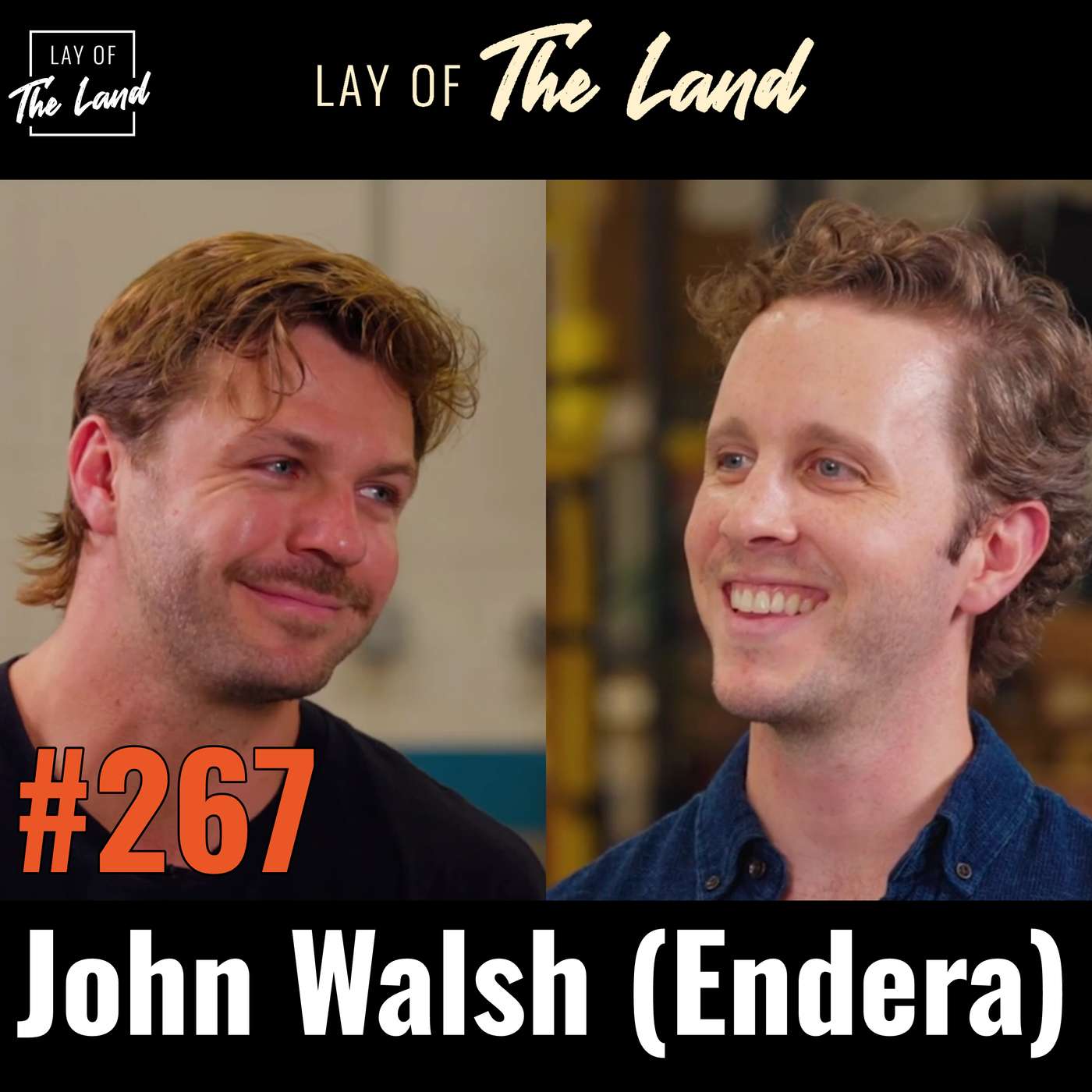
To hear the complete story of how Endera scaled its manufacturing operations and broke into the bus industry, Listen to the full episode of Lay of The Land. Discover firsthand how founders navigate near-failure moments, build high-performance teams, and shape the future of transportation right here in Ohio.
Frequently Asked Questions
Why did Endera choose to vertically integrate its manufacturing operations?
Endera realized that relying on external bodybuilders and powertrain suppliers created too many points of failure and endless finger-pointing. To control product quality, customer service, and delivery timelines, the company needed to own the entire manufacturing stack under one roof.
What are the primary challenges of scaling a heavy vehicle manufacturing plant?
Scaling physical manufacturing typically requires twice the capital and time initially projected. The main operational hurdles involve building repeatable processes, training a workforce on complex automotive assembly, and managing supply chain friction as production volumes increase.
How do specialty vehicle manufacturers train workers with no prior bus-building experience?
Manufacturers utilize structured onboarding programs, detailed workstation work instructions, and state-backed credentialing programs for specialized skills like welding and electrical work, paired with a strong emphasis on promoting talent from within.
Why are locations like Ottawa, Ohio attractive for modern automotive manufacturing?
Ohio offers a strong legacy of manufacturing infrastructure, a hardworking labor force with deep family values, favorable cost-of-living advantages, and access to robust regional supplier networks that make large-scale vehicle production economically sustainable.