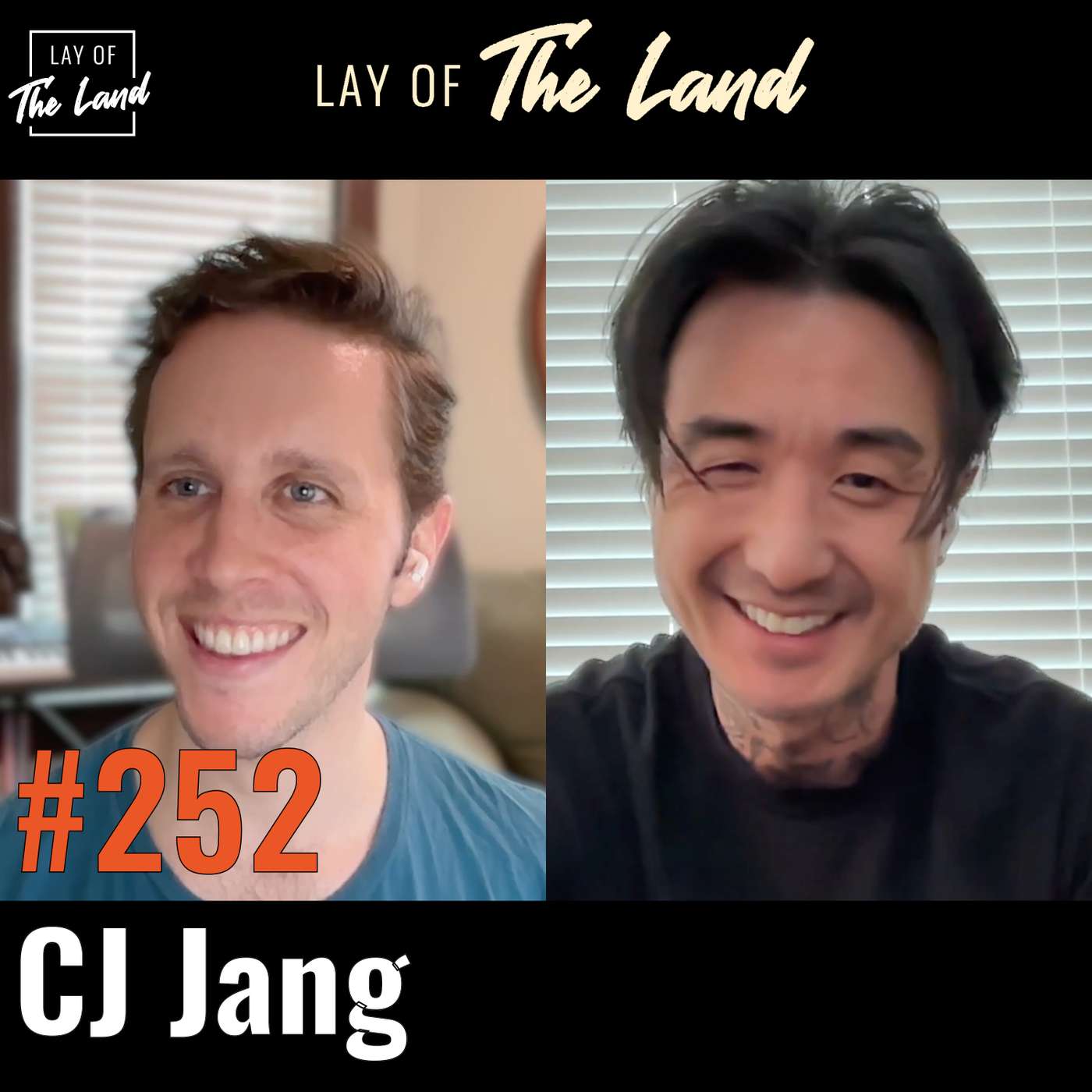
#252 CJ Jang (Balance) — No Shortcuts

 Apple Podcasts
 Spotify
 YouTube
 Castro
 RSS Feed
 Hochan (CJ) Jang is the co-founder of Balance Pan-Asian Grille.
What began for CJ as an effort to build a healthier, more creative, and more everyday kind of Asian fast casual concept more than 16 years ago has grown into a beloved regional brand with locations across Toledo and Cleveland — one defined by scratch-made food, bold flavors, affordability, and a real commitment to hospitality.
In our conversation, CJ and I explore his journey from growing up in his mother’s restaurant after immigrating from South Korea, to discovering the potential of fast casual, to building Balance with little more than conviction, credit cards, and a willingness to learn everything the hard way. We talk about how the business found its footing, why location and customer feedback were so pivotal early on, how he thinks about quality, pricing, and menu innovation today, and what it takes to scale a restaurant brand without losing the culture and standards that made it special in the first place. I very much enjoyed this conversation, and I think you’ll hear in CJ both a deep humility and a real love for the craft — I hope you enjoy it as well.
00:00 Introduction & Entrepreneurial Roots
00:26 Welcome & Background
03:00 Early Relationship with Food
06:19 From Food to Entrepreneurship
12:09 Inspiration from Fast Casual Concepts
13:36 Challenges of Ethnic Fast Casual
16:20 Launching Balance Pan Asian Grill
19:40 Opening the First Location
22:58 Importance of Location & Customer Feedback
27:53 Balance’s Identity & Values
31:07 Navigating Pricing & Affordability
35:41 Scaling & Building Culture
40:11 Vision for the Future
44:57 Hard-Earned Lessons
49:02 The Role of Upbringing & Community
51:47 Closing & Hidden Gem in Cleveland
-----
LINKS:
https://www.linkedin.com/in/hochan-j-88513510a/
https://www.linkedin.com/posts/balancegrille_2-first-generation-entrepreneurs-are-redefining-activity-7351709996880998400-LM0l/
https://balancegrille.com/the-balance-grille-leadership-advantage/
https://balancegrille.com/story/
-----
SPONSOR:
Cerity Partners
Cerity Partners, a full-service investment and wealth management firm serving high-net-worth individuals, entrepreneurs, and business owners, is proud to sponsor Lay of The Land. The firm has local roots in Cleveland and across Ohio, and like this podcast, Cerity Partners advisors specialize in serving the interests of local entrepreneurs and business leaders. The firm’s national presence means it can offer the resources and specialized knowledge of the largest institutions with the independence and service of a neighbor. The Cerity Partners Cleveland team understands the complexity that comes with wealth, and they adhere to fiduciary standards. Discover the financial lay of your land.
Learn more at https://ceritypartners.com/NPR or call 216-464-6266.
Roundstone Insurance
Roundstone Insurance is proud to sponsor Lay of The Land. Founder and CEO, Michael Schroeder, has committed full-year support for the podcast, recognizing its alignment with the company’s passion for entrepreneurship, innovation, and community leadership.Headquartered in Rocky River, Ohio, Roundstone was founded in 2005 with a vision to deliver better healthcare outcomes at a more affordable cost.
Over the past two decades, Roundstone has grown rapidly, creating nearly 200 jobs in Northeast Ohio. The company works closely with employers and benefits advisors to navigate the complexities of commercial health insurance and build custom plans that prioritize employee well-being over shareholder returns. By focusing on aligned incentives and better health outcomes, Roundstone is helping businesses save thousands in Per Employee Per Year healthcare costs. Roundstone Insurance — Built for entrepreneurs. Backed by innovation. Committed to Cleveland.
Learn more at https://roundstoneinsurance.com/
-----
Stay up to date by signing up for Lay of The Land's weekly newsletter — sign up here: https://layoftheland.ck.page/5f0c1e28fa
Connect with Jeffrey Stern on LinkedIn — https://www.linkedin.com/in/jeffreypstern/
Follow Lay of The Land on X @podlayoftheland
--
Stay up to date on all Cleveland Startup and Entrepreneurship stories by signing up for Lay of The Land's weekly newsletter — sign up here.
CJ Jang [00:00:00]:
It would be hard to sell your baby. You know what I mean? It's like we started with nothing and it will always hold such a. Such a. I don't know, it's such a big deal for me to have gotten even this far, and truly, it's a blessing and I'm very grateful for it and it just makes me want to work harder. And I would love to continue to see our brand grow, you know, and we have so many other ideas, so. A lot of ideas. Not enough time. Yeah.
Jeffrey Stern [00:00:26]:
Welcome to the Lay of the Land podcast where we are exploring what people are building in Cleveland and throughout Northeast Ohio. I am your host, Jeffrey Stern, and today I had the real pleasure of speaking with CJ Jiang, co founder of Balance Pan Asian Grill. What began for CJ as an effort to build a healthier, more creative and more everyday kind of Asian fast casual concept more than 16 years ago has grown into a beloved regional brand with locations across Toledo and Cleveland, one defined by scratch made food, bold flavors, affordability, and a real commitment to hospitality. In our conversation, CJ and I explore his journey growing up in his mother's restaurant after immigrating from South Korea to discovering the potential of fast casual, to building balance with little more than conviction, credit cards, and a willingness to learn everything the hard way. We talk about how the business found its footing, why location and customer feedback were so pivotal early on, how he thinks about quality, pricing and menu innovation today, and what it takes to scale a restaurant brand without losing the culture and standards that made it special in the first place. I very much enjoyed this conversation and I think you'll hear in CJ both a deep humility and a real love for the crap. And I hope you enjoy this conversation as well. Lay of the Land is brought to you and is proudly sponsored by Serity Partners.
Jeffrey Stern [00:01:48]:
As a wealth management firm, Serity Partners shares Lay of the Land's same dedication to serving local business owners and and the Serity Partners Cleveland team understands the challenges that entrepreneurs and founders face here in Cleveland, Northeast Ohio and beyond. Wealth comes with complexity and increased demands on time and resources, it is easy to become overwhelmed. Serity Partners clients benefit from a unified team of local specialists who coordinate across both business and personal needs. With Serity Partners commitment to transparency in putting clients needs first, complexity can become clarity. To learn more, please visit seritypartners.com or call 216-464-6266 today. Serity Partners proud to be recognized as one of the top financial advisory firms in the country.
Jeffrey Stern [00:02:39]:
Yeah, so always thinking about where the best place to start these conversations is. And I thought for our conversation today, I wanted to just ask what the earliest version of your relationship with food and restaurants is. What, what kind of comes to mind?
CJ Jang [00:03:00]:
Yeah. So I don't know if I ever told you the background of my younger days, food wise, my relationship with food, it kind of came about when we moved here. So obviously I was about 8 years old, kind of rewinding back. My dad passed away unexpectedly when I was seven years old. And then so in Korea, that's where I'm from, South Korea. My parents, my mom was always in the food scene because due to the fact that food was just a very, it's a lot, it's a much alive kind of thing in Korea, everything's made from scratch. You know, there's a lot of restaurants in every corner. But in Korea, we respect the ingredients itself.
CJ Jang [00:03:41]:
And it's a very common thing for you to cook at home. And my grandma on my dad's side, she was an avid cook. She was more from the, they were more from the countryside. So everything was cooked fresh, everything was grown there. So when my mom got married to my father, she had to learn how to cook to be a stay home mother. That was like a big part of being a good wife, I suppose in those days. So she learned a lot from my grandma. My mom cooked for me all the time and my brother.
CJ Jang [00:04:11]:
And even though when my dad passed away we decided to move here, you know, all that came with us. So when we moved here, my uncle, actually my dad's brother, was already living in the United States. And that's how we came to Bowling Green, Ohio. Out of all the cities that we could have been, you know, we could have been in la, New York, Chicago, but we somehow ended up here. And when we came, we obviously needed to make some sort of a income for, for us. So what we did was we sold our house and everything in Korea, came here, moved into a little apartment, tiny apartment in Bowling Green. And then we decided to open up a restaurant. It was called the China.
CJ Jang [00:04:52]:
Even though we're Korean, we specialized in Chinese American food because that's what was really booming back then in the early 90s. So we decided to do that. My mom still has that restaurant. It's been, what, since 92, so going on about 34 years, she still has that here. And early on in stage, since I was like 13, 14 years old, I would just walk straight to the restaurant from school. I would just hang out at the office. And then when they get really busy. I would just kind of hop in there.
CJ Jang [00:05:24]:
You know, it's kind of like those little memes that you see. You know, if you see a little Asian kid working on homework in the. Behind the restaurant, you know, the food is good. So I was that kid. I had my hands dirty early on the stage, helped them wash dishes. You know, she wouldn't let me use the knife, but I observed a lot of things. It was just like a lot of, like, hustle and bustle, you know, and people just moving around. And somehow I kind of, like, got into it, you know, it felt fun.
CJ Jang [00:05:53]:
You know, when you were little, you don't know much, so I got into that. So through my mother's cooking and through her restaurant, I was exposed to that scene quite early on stage. And I think that's what helped me really become a foodie. And I just love food in general, so I fell in love with food, Exploring different kinds of cuisines, and that's probably the earliest. You know, Just thought of, like, how I got really into food itself, and it never stopped. Yeah.
Jeffrey Stern [00:06:19]:
Did you think a lot about entrepreneurship, or was it really more grounded in. In food?
CJ Jang [00:06:25]:
You know, when I was younger, definitely not anything to do with business side or entrepreneurship. It was just more for the love of trying different cuisines. And I was not a picky eater at all. You know, like, I've always loved everything and anything. When we moved here from Korea, it's definitely a huge difference when it comes to flavor profiles. So what I realized is, like, coming here, you know, people would say, like, oh, my God, kimchi. It's stinky and it's. It's terrible, some people say, you know.
CJ Jang [00:06:53]:
But then when I came here, I was like, you know, the first meal I had was a kid's meal in a Happy Meal at McDonald's.
Jeffrey Stern [00:07:01]:
Yep.
Jeffrey Stern [00:07:01]:
Yeah.
CJ Jang [00:07:01]:
And I love the fries, but when I took a bite into that cheeseburger, the cheese was so stinky, you know, it was so pungent. But then, you know, the more I ate it, it was kind of addicting in a way. So I was like, okay. I could kind of see the resemblance, right? It's kind of like, okay, cheese is kind of like. Or kimchi. When I. When I tasted that, you know, and then I. The more I tried it, it made me want to try different cheeses and different things.
CJ Jang [00:07:28]:
And then you kind of. Your palate kind of gets adjusted to it. So for me, it was. It was just more of an exploratory thing, and you kind of, like, become part of it and you become addicted to it, and then you want to try and you want to keep pressing the envelope a little bit and try something new. And I just never wanted to stop trying different ethnic foods or different types of foods and different prepar. And you know, I never saw myself as like becoming a chef early on stage in my life. I mean, I tried so many different things, I studied so many different things in college. But in the end, I feel like it kind of led me to where I wanted to be was the passion for food.
CJ Jang [00:08:10]:
And, and it, it's a rewarding feeling too, to serve the food that you're proud of, that you would be serving for your own family as well. And for you to be able to sell that product to consumers was a big thing for me as well. So I feel like I've always been into it, but entrepreneurial wise, you know, it's a big move. You know, restaurant business itself is a, is a very tough gig. I know it's, it's very hard to survive even three year marks. So I don't know what I really thought about it, man. I think I just kind of like thought about like, I want to serve food and if I can make some money off of it, great. And that's where we kind of like left it off and I just jumped in there, I guess.
Jeffrey Stern [00:08:50]:
Yeah, I love the cheese kimchi parallel. I never really thought about that.
CJ Jang [00:08:54]:
Yeah, it's true though, man. You know. Yeah, it really is though. They're both kind of, you know, pungent in some ways. And you know, like once, once fermented, once aged, you know, it's kind of very similar thing to do.
Jeffrey Stern [00:09:06]:
So you mentioned you explored a variety of different paths. I'm just curious, what, what did you study? What was what, what were you curious about? What, what did you think you might do when you grew up?
CJ Jang [00:09:16]:
Right. So. Well, way in the beginning, you know, in Asian households, especially like the Korean Japanese, even Chinese households, nobody really wants you to become a restaurateur because there's so many restaurants. When you say you own a restaurant, it's not as like prestigious in a way as it would be here because when Koreans think of restaurants, it's like a little mom and pop, little hole in the wall everywhere. I mean, there's restaurants in every, every block, you know, multiple. So when my grandmother found out that I wanted to do a restaurant business, she freaked out and she was like, why would you put yourself through that struggle? You know? And all these Korean households, it's top three things. It's Kind of like doctor, lawyer, or like a, an engineer, you know, or scientist, things like that. And they wanted me to become a lawyer, to be honest, because they thought that I would, I would do well in that field.
CJ Jang [00:10:09]:
But I just couldn't really see myself enjoying it. And so I started with fashion studies and merchandising and textile industry. I was really into fashion and whatnot, and I still am. But I began to realize I didn't really like sewing and I didn't want to just like, you know, it was a very niche field where you have to know the right people. And I just didn't see myself like really succeeding in that field. So then I changed to kinesiology, exercise science, psychology, art history. I mean, I changed my major to about five times. Jeffrey.
CJ Jang [00:10:44]:
So took me a long time to graduate. And in the end, you know, I felt like business itself and entrepreneurship and marketing is a good field. So I just knew I had to graduate, you know, show my mother the degree and make her proud. So I ended up with fine arts and business. And then that's towards the end of the year of my college. That's when I knew, you know, that's when the recession hit as well. Was that like 2008, 2009. So it was really hard to get a job as well.
CJ Jang [00:11:15]:
And then that's when around that time Chipotle was really booming. My brother was going to Miami University in Oxford. This was probably like what, 2005, 2007, somewhere around there. And I got a chance to try Chipotle for the first time. And bam. And I was like, wow, this is a pretty good idea, you know, and I know this place is going to do really well. And I wanted to try and create something that's fast casual segment qsr, but that is healthier, that's that you can be proud of, you know, and at the right price mark. And that's when I started thinking more and more about like, what if I can do something that's like in an Asian cuisine, you know, and there's like a lot of stigma on Asian food, you know, with like it's either like a cheap Chinese buffet or like it's very expensive Japanese, like sushi cuisine.
CJ Jang [00:12:09]:
And why can't I create something in the middle that you can eat every day or even like a few times a week. So that's when I started brainstorming about the idea of like a fast, casual style farm to table Asian cuisine.
Jeffrey Stern [00:12:23]:
One of the questions I wanted to ask you about was kind of related to Chipotle actually.
CJ Jang [00:12:29]:
Yeah.
Jeffrey Stern [00:12:29]:
And I mean, obviously they figured out a formula to do what they do pretty well.
CJ Jang [00:12:35]:
Yeah.
Jeffrey Stern [00:12:36]:
And knowing all the progress that you've made, which. Which we'll speak to in a moment. But why. Why do you think there hasn't been more proliferation of the ethnic fast casual alternatives as. As you've seen in like a Chipotle? Like, why hasn't the industry overall kind of gotten there?
CJ Jang [00:12:56]:
I feel like there has been a lot of attempts, in my opinion. Yeah. You know, pk, my business partner and I, I mean, we look. We read articles all the time and we look for, like, all these different concepts that are popping up, emerging concepts and whatnot. And I feel like there is a lot throughout the country, but what we've noticed for the past, even like 10 years is that there is not one single like the national ruler, in a way. Kind of like how Chipotle is with the Mexican fast casual cuisine. There's been quite a few Asian, because Asian segment is, I believe, is like the top three of ethnic cuisines in United States. It's growing as well.
CJ Jang [00:13:36]:
But I have. It seems like no one holds that title yet that's gotten into a national brand. But if you look at like the region by region, there's always some sort of an Asian fast casual cuisine that is emerging and that is growing as well. And, you know, we've always told ourselves, like, you know, I mean, we already opened up balance. We pretty much risked everything, and our goal is to get as many locations as possible and see where we end up, you know. But then Covid hit. Right. So we were actually in the making of like, getting the funds and getting the capital raised right before COVID hit.
CJ Jang [00:14:13]:
And then when Covid hit, everything had to be shifted. Everything changed because the uncertainties, you know, of all these investors, and even for us, you know, we didn't know what was going to happen. Covid was such a huge, huge life changer for everybody. We had to kind of reset and take care of our people then and there and our locations. And we just wanted to make sure that things go well with the current existing stores before we even think about the future. But I think as far as. I feel like it's a regionality preference as well, because I know in some regions, I think, like, what even Qdoba does pretty well and maybe even better than Chipotle. I think it really depends on where you are from.
CJ Jang [00:14:55]:
As far as region goes. Could be from Northeast or the west coast or the South. I think everyone has a little bit of a preference when it comes to flavor. So I think that could be part of it. I think it's just that there's so many concepts out there, especially in the fast casual segment as well, that's been growing. I think it's hard to just put a mark on one restaurant that could potentially just please every region of the United States. That's the way I see it. So when we do, like, try to grow, you know, our goal is to always listen to the regional preferences.
CJ Jang [00:15:30]:
If we were to ever open one in west coast versus northeast of United States, I know there will be some things that I would have to introduce as far as, like, the dishes go and try to fit that, the needs of the palate of different regions. So I think that could be part of it. But, you know, I'm no genius, obviously, but that's the way that I've been kind of, like, studying the market a little bit as far as, you know, my chef side goes, and I better understand what people want is a more comfort food. Is it more clean eating, is it more bolder and flavored lighter? I mean, it could. It could be a million different things. And that's why I try to always decode, and sometimes it's a challenge, but it makes it fun.
Jeffrey Stern [00:16:11]:
So you experienced this fast casual concept for the first time through Chipotle. How do you go from that to the formation of balance?
CJ Jang [00:16:20]:
Yeah. So, you know, when I first tried Chipotle, I loved the burrito. I had that big, giant burrito, and I thought it was like, okay, this is a good value. And especially back then, you know, back in, like, what, over 10 years ago, things were much cheaper, you know, before inflation hit and all that. I thought it was great, and it was very unique. It wasn't like a typical burrito that you would go to a Mexican restaurant where I feel like it's very singular. You know, the refried beans tastes like refried beans. The meat tastes the same just like any usual other typical Mexican restaurant.
CJ Jang [00:16:52]:
This was very unique to me, a giant burrito, you know, and the marination of the. Of the meat was very different as well, and it just kind of stuck out. But one thing that I did notice is that with Chipotle, you know, I love chipotle, by the way, so I'm not trying to talk down at all, but I think their menu was too. Too small. There was. There was not enough choices, especially back then. Nowadays, you know, they're adding more things to it, which is great, but back then, it was just like a burrito. I think they had a bowl and then I don't even know if they had small tacos back then, but it was just like that was it.
CJ Jang [00:17:24]:
And then chips. So I, I figured I was like, okay, if I wanted to create something like this with Asian cuisine, and when it comes to Asian cuisine, it's such a, it's such a big, big menu. And I also wanted to add the pan Asian part to it. So that way that I am not stuck in one Asian cuisine. I didn't want to be like balanced Chinese cuisine or Korean cuisine or Indian cuisine in order to make it as versatile as possible. And for me to not have any, not to be tied down into one cuisine, I knew. And if I wanted to continue to create different dishes and make it exciting, I needed to do something about that. And that's where we added balanced pan Asian grill to it.
CJ Jang [00:18:07]:
So that way I can kind of tap into all of these beautiful Asian cuisines and introduce it to the region and, and never be tied down to just one kind. So I thought that was one thing that I recognized like very early on stage is like, yes, it's a fast casual, but you could still make it a qsr, but still be able to introduce something new and different, maybe by seasonalities. So that was one thing I recognized right from the beginning that I wanted to do for myself. Yeah.
Jeffrey Stern [00:18:36]:
Lave the Land is brought to you and is proudly sponsored by Roundstone Insurance. Headquartered in Rocky River, Ohio. Roundstone shares Lay of the Land's same passion for bold ideas and lasting impact from our community's entrepreneurs, innovators and leaders. Since 2005, Roundstone has pioneered a self funded captive health insurance model that delivers robust savings for small and medium sized businesses. They are part of the solution to rising healthcare costs, helping employers offer affordable, high quality care while driving job creation and economic growth throughout Northeast Ohio. Like many of the voices featured on Lay of the Land, including Roundstone's founder and CEO Mike Schroeder, Roundstone believes entrepreneurship, innovation and community to be the cornerstones of progress. To learn more about how Roundstone is transforming employee health benefits by empowering employers to save thousands in per employee per year healthcare costs, please visit roundstoneinsurance.com Roundstone Insurance built for entrepreneurs, backed by innovation, committed to Cleveland.
Jeffrey Stern [00:19:40]:
So today you have a bunch of locations, but when you went to start the first one, how much of you know, just growing up in the family business, you know, can you, can you take with you from your mother's restaurant that you kind of deliberately carry forward? How much of it are you Figuring out on the fly for the first time. Just like, how do you actually. How do you get started?
CJ Jang [00:20:03]:
So I thought I learned a lot just being there and all that, man. Boy, I was. Was I wrong? I was very, very wrong. You know, like, coming from a mom and pop restaurant and then trying to open up a establishment. It was night and day difference, man. I mean, I thought. Me and. Me and my business partner, pk, we thought, okay, we're straight out of, like, graduates, you know, from college.
CJ Jang [00:20:26]:
Why not? Like, let's go. Let's go to a bank and get a. Get a. Get a loan, right? A traditional loan. Oh, no. Like, we got rejected so many times, they were just like, okay, so you guys want to open up a restaurant, one of the highest risk businesses from ground up. And, like, what? It's not like you guys are even buying a franchise. You guys want to start a business? Like, do you guys have any credibility? No, we just have some credit cards, you know, and they almost, like, laughed at us, thinking, like, okay, these guys are crazy, or they just don't know what they're doing.
CJ Jang [00:20:58]:
Like, so we. We definitely struggled to get any kind of traditional loan. In the end, what we had to do was my mom gave me some money that she saved up for when I get married. It was like a wedding, future wedding fund. And I was like, mom, I need that right now. And she's like, what do you need it for? I was like, I want to open up a restaurant. And she thought I was crazy. Same thing for PK's mom.
CJ Jang [00:21:22]:
She thought, you know, he was crazy. But in the end, you know, we took the risk. We swiped every credit card. Surprisingly, that's when companies were giving out crazy credit limits to even, like, people like me, who's still in college. I had a couple credit lines that were like, 10, 20, $30,000. So I was like, I'm just gonna use this up and see what happens. Credit line, Home Depot, Ikea, Furniture, credit lines. So we pretty much depended on credit lines.
CJ Jang [00:21:53]:
And we got lucky with one landlord in Maumee. That was our first location. And him and my business partner, PK, they really just kind of connected really well. Mr. Rasmus and he gave us a chance with that real estate property, and that's how we were able to open up our first location. But what I could take was, like, I feel like I had to restart everything, everything that I learned through my mom's restaurant. I mean, it's so different. Everything has to be perfect, right? Everything has to be measured and weighed.
CJ Jang [00:22:22]:
When it Comes to the kitchen side. When I used to work at a restaurant, I eyeballed everything. You know what I mean? It's just like, you're so used to it. You know, you have one dish, you know, that you've been working on for the past decade. So my mom doesn't really. She doesn't really teach me, like, oh, it has to be, like, milliliters or fluid ounces. You put this in that and that end. Get it done.
CJ Jang [00:22:41]:
I'm like, okay. So it's kind of like a restart for everything. But. But what has taught me was, you know, just, like, working hard, just hustling, and just, like, not giving up and just, like, did the work ethic itself. I think I had it from the beginning, so that really helped out a lot. But everything else, all the fine details, I learned it the hard way, and it was a rude awakening for sure. But, hey, you know, we didn't pay ourselves. We didn't pay each other for the first, like, two and a half years.
CJ Jang [00:23:11]:
PK and I put, like, well over our 90, 80, 90 hours every week, and we survived, you know, but then we opened up our second location in Sylvania, and that's when things really started booming. And, you know, when people say location, location, location, I'm a firm believer in that. And you just can't lose faith in your own company. And you're a concept. And we got lucky. Yeah.
Jeffrey Stern [00:23:32]:
At what point into the first restaurant do you start thinking about, can this. Can this become a platform? I mean, obviously, coming in with the inspiration of fast casual as a concept, you know, that's kind of there from the beginning. But at what point are you like, this is. This is working well enough that we. We're going to give this a go?
CJ Jang [00:23:53]:
You know, when we first opened up in Maumee, we tried so many different ways. We even did, like, a half dining service, half not. So where you would come in, we would actually have, like, permanent dishware. We will serve customers there. I mean, we've tried all types of cuisines, so everything is obviously somehow related to Asian cuisine. But I've tried burgers. I've tried subs. I've tried pasta.
CJ Jang [00:24:21]:
I've tried different soups. I've tried literally every kind of way that I could bring in the customers, because when we first opened up, I mean, we weren't making much at all. I mean, it was hard to get the word out because, you know, we. It was a bootstrap company, and we just kind of, like, opened it up, didn't know what we were doing with marketing, the location was kind of tucked in, so it was really hard to get attention. I remember we even put this, like, a giant, like, balloon above our location just to, like, somehow make a mark. Right. For people to be curious to come in and check it out. But in the end, what we did was we listened to our customers a lot.
CJ Jang [00:24:58]:
I think that was one of the biggest thing because we didn't really have an identity as Balance. A lot of people were confused. It's like, balance. Is that like a vitamin store? Is that a yoga studio? Like, what is it? Right. And they would come in, they would try the food. But then I always asked for feedbacks. Every customer that. Every single customer that came in, hey, what did you like about it? What did you not like about it? And I just wanted to try and get as many feedbacks as possible.
CJ Jang [00:25:22]:
And in the end, we needed to find our identity. That was one of the things that was really missing. And through the. I'd say the first year in our first location, we were still struggling quite a bit. But that's when we took a big leap, is that, you know, we knew it wasn't the most prime location in our first location. And in order for us to get our concept and our word out, we needed to be in a better location and we needed to add a second location. And that's when it was very nerve wracking. Right.
CJ Jang [00:25:51]:
So, I mean, we're already in debt in our first location, and then you max out all his partners. Yeah. And then we're literally talking about. We're. We're literally against our wall. We're not. We can't even pay each other. We're barely making money.
CJ Jang [00:26:04]:
But then, you know, we had faith in our concept. We knew that it wasn't ultimately just our concept. It was really more about the location and people just didn't know about us. And that's. That was a lot of the feedbacks that we got from our customers is too. It's like they love the fact that it was healthier. You know, they had a lot of flavor and this and that, but it's hard to find this place. So we took a big leap.
CJ Jang [00:26:29]:
That's when we're like, okay, we need to just. It's all in or all out. Right. So we found that prime location in Sylvania, one of the busiest areas in Toledo. And we somehow, like, got a good relationship with the landlord, Joe, and he gave us a shot, and we opened that up. That was like, literally 800 square feet. We took what we could get. But we knew that was the location we needed to be in and we opened that up and boy, like, we, it was like the best problem that we had.
CJ Jang [00:27:00]:
It was just, we were just booming, you know, and eventually he gave us another spot next door and made it into like a actual full size store with bubble tea and everything else. And I'd say Slovenia location was the location that kind of changed everything for us. And then, you know, the curiosity got the cat. You know, people were coming in, just checking it out. Oh, there's a lot of cars there. I want to see what it is. Oh, it's a restaurant. Great.
CJ Jang [00:27:26]:
And then that's when we were really able to kind of like fine tune our identity as well. So we decided to do like snacks, Asian influence snacks, street tacos, like Asian tacos, doubles, build a bowl, bubble tea. And then we also switched our menu as well pretty frequently back then and be able to introduce something new. So. Yeah.
Jeffrey Stern [00:27:47]:
How would you articulate what balance's identity is today?
CJ Jang [00:27:53]:
I'd say it's definitely a farm to table. You know, everything that we prepare, everything's from scratch. I mean, I take a huge pride in that, especially as a chef. It's. I never want to sacrifice that. You know, even if we are to grow, continue to grow, one thing that I told myself and everybody else is that we're not going to make shortcuts, you know, even from the preparation of things. We're not going to get bagged sauces, we're not going to get it done from a commissary somewhere that we don't even know, and then we just serve it. I think that's one of the things that a lot of companies do, is when they do get to like certain number of locations and they grow, grow, they find a way to just, I don't know, I mean, to keep it more consistent.
CJ Jang [00:28:37]:
I get it. To be more consistent. But in the end, you're sacrificing quality. And that's part of our big identity, is that we make everything from scratch. So, like, even our sauces, we have well over 20 different sauces in the house. And we make that all from scratch every day because. But it makes a huge difference when you try it. Like even like our ranch sauce, for an example, if you were to try our ranch versus other places, you'll be able to tell the difference why it tastes so different and so much more fresh.
CJ Jang [00:29:06]:
So that's part of our identity. And for me to be able to have the freedom to introduce something new, we do seasonality menu, so we switch it twice a year. We obviously keep our staples, but in the end we also offer, like I say, like, in a way, chef special or for like spring, summer, I focus more on like the. The salads and something more like a lighter fare. And then for fall and winter, I sa that to introduce a few new dishes. That's more comfort food as well. So that way I can explore all the different flavors and keep the menu exciting. And.
CJ Jang [00:29:40]:
And I think customers really love that. It's. And it gives them enough time, you know, for us to run that menu four to six months before we switch it, that everyone can try it as well. And just listening to the customers. And the bubble tea is also a huge hit, obviously, so those are definitely our identity. I think it's. It's more hip in a way. I like to use the word hip sometimes.
CJ Jang [00:30:01]:
And it's more unique in some ways, especially like the Midwest region. I want to introduce something that's, that's kind of like, you know, fun and something that you've never really tried. You know, having a Korean background that's lived there before and coming and bringing in that palette and combining that with the western palette, I think has helped me out quite a bit as well.
Jeffrey Stern [00:30:21]:
It all resonates. When I was still working downtown in. In Tower City for a period of time, imbalance was like a. Twice a.
Jeffrey Stern [00:30:29]:
For me.
Jeffrey Stern [00:30:29]:
The Buddha bowl carried me through a lotta bowl.
CJ Jang [00:30:32]:
Yeah. Yeah.
Jeffrey Stern [00:30:33]:
But one of the things that, you know, I'm also a big foodie and so love trying new places. One thing that I think is interesting and certainly would love to understand from the business standpoint, you know, you mentioned at your first Chipotle experience, call that before inflation hit and just, you know, how expensive food seems to have gotten, particularly in this category of fast, casual and even fast food. I don't know the last time, if you still go to McDonald's to try and get a burger, but to get a meal is $20.
CJ Jang [00:31:07]:
It's crazy. Yeah.
Jeffrey Stern [00:31:09]:
And you've been able to maintain discipline on price, and I'm really curious how you've been able to keep it as affordable as you've been able to.
CJ Jang [00:31:21]:
Yeah, I mean, yeah, I don't. I, I agree with you. It's been crazy. Fast food is not fast food price anymore. You know, like, and I'm not gonna lie to you, like, I. I enjoy fast food here and there for sure. Like, I, I'm like a human garbage disposal. I, I eat anything and everything.
CJ Jang [00:31:38]:
Whatever. I'm in the mood for, I will go for it. But I will tell you. Yeah, If I go to, if I were to go to McDonald's or Wendy's, I kid you not, Jeffrey. I spend about $25 by myself easily. Yeah, 25 to $30. Like it's crazy and it doesn't even fill you up that much. And then you just get lethargic and you just fall asleep.
CJ Jang [00:31:55]:
Like it's, it's a vicious cycle. But as far as pricing goes, I mean, what we told each other, me and my business partner, whenever we're talking about this, it's is that like everybody is trying to go value, value, value. And I get that, especially in the fast food market. And they're trying to retain their customers by, you know, obviously selling something that's affordable, which I completely understand as a fast casual segment for us. You know, we thought about that and we wanted to obviously not raise our prices for our customers. What we thought instead we should do is continue to work hard and work closely with our vendors and see what we can do. You know, just show a little bit more commitment into using their products, whatever we gotta do. And you know, for us, you know, we have a big inventory, but they're very consistent.
CJ Jang [00:32:43]:
You know, there's very specific items that we use and we go through a lot of what these vendors want is they just want to know about an average expenditure of like how much you use for different items. And we give them a number and numbers are always workable. Raising up a price for our customers is not always the answer, in my opinion. That just makes our customers spend more money for what they're getting. And if we can change that and if we can at least try and negotiate a better pricing with our vendors, that's a better, that's a better win for me. We even actually went all halal on our proteins not that long ago. It's been about, maybe about a year or two. So all of our land animal proteins are all halal.
CJ Jang [00:33:24]:
Even though they cost more, to me, it's worth, it's worth the price to me. I don't, I don't think price, putting something on price tag is the ultimate clear deciding factor for us. We look at more of a long term investment and if we can somehow still make a profit enough that we can still grow and pay our employees, you know, the salary and all that, and pay ourselves, then we're making enough money, you know, and you know, as long as we continue to have a same store to year to year sales growth, that's all we look for, uh, we're not trying to make another 10%, 20% here and there just by charging more. I just don't think that's always the right solution. And if we can do without that, we'll continue to do so. So we have a really good relationship with our suppliers. Um, I think that's the first step and just having some level of belief and commitment into each other that obviously I'm not going to just like, hey, give it to me $0.10 less a pound, and then I'm going to go somewhere else and get it. Like, it's nothing like that.
CJ Jang [00:34:29]:
It's. It's a very straightforward, honest, you know, deals. And, you know, just having, having the guys that you enjoy working with close has been very helpful to us and just being fair, I guess, in a way. And, and that's how we've been trying to keep afloat, man. You know, with all this recession and inflation and what have you. It's definitely been a challenge, but I feel like it ultimately, it made us sharper and it made us really learn a lot more and we're going to continue to do so.
Jeffrey Stern [00:34:56]:
In the evolution of balance so far, you go from a period where in one, even two locations, you're in it most of the time, all the time. Obviously you have to at some point with the scale you're at today, you can't be everywhere all at once. And so it's about when you think of scale franchising, operating systems management, and all these kinds of new problems that you earn the right to explore as the business was successful. How, how have you thought about all those? And, and just what, what is. What is required to have locations where you're not running it yourself be as successful as you would like for them to be?
CJ Jang [00:35:41]:
Yeah, I mean, that's a great question. I mean, I think one of the main big changes that we actually made this year is exactly that. As you know, like, operations alone is a whole nother beast. I think I was actually just talking with this with one of my friends yesterday. It's like, as we grow and as we try to grow, what can we do to maintain, you know, the same experience for our customers and for our employees? And it was that, you know, we, I needed to bring in someone that can solely focus on operations. So just to give you a quick idea, like my business partner Prakash. He is mainly in charge of pretty much, I guess what I call behind the curtains. Right.
CJ Jang [00:36:24]:
So he's in charge of finance. He also marketing, advertising, like tech support kind of stuff. Like, he does a little bit of ins and outs of everything when it comes to, like, anything besides operations. And then for the longest time, since day one, I was in charge of operations. I'm pretty much, you know, wearing a lot of hats in that and working closely with my store leaders and managers and specialists. So we have some leadership positions that I solely deal with, and also, obviously, the culinary side. But when I was in charge of operations, I just felt like I lacked enough time and in creating the best dishes that I could come up with. So I feel like I was always rushing into culinary side, and I just.
CJ Jang [00:37:09]:
Because I was so sucked into operations. So this past year, we decided to bring in somebody from another concept just to be solely focused on operations and introduce someone as the chief of operations. So we brought in our. Our guy Jan, and he's been doing an amazing. And so with the help of him and Shannon, who are in charge of operations, it really took a big relief on me especially, and now I can totally focus more on just the culinary and the menu side. And we started to recognize that because last year, when we released our fall winter menu, it just. It did so well. We noticed a huge spike in our total revenue and our sales, and when we looked at it deeper, it was the new items.
CJ Jang [00:37:56]:
So we were thinking, like, oh, man, like, if I could actually put more time and effort into creating new, fun, exciting dishes, it's a. It's a win. Win. Right? So that's the big change that we actually made is putting the right people in its places. Right. So, you know, we just introduced a new store leader for our Perrysburg store trail, who's been with us for. Since literally day one. You know, we have a really low turnover rate, which we're very proud of.
CJ Jang [00:38:23]:
You know, average tenure for our people is, like, four or five, six years. And those are the individuals that I really, truly enjoy, like, seeing grow with us. Right. It's not just me and pk. This is a team. Team effort for sure. And, you know, the culture is obviously huge. I'm sure you hear that word so many times nowadays.
CJ Jang [00:38:43]:
Culture, culture, culture. But it's. It's not a. To me, it's a requirement. It should be required. Especially, like, in a business, like, restaurant where turnover rates are so high in general. You know me, when you treat your employees and your clients well, I think it'll just kind of pay itself back. So, you know, we pay fair.
CJ Jang [00:39:04]:
We pay more than usual. For us, as casual restaurant, we try to take care of our people. Listen. And, you know, it's a business right in the end of the day. But if we can grow together, I mean, it's a rewarding feeling. So putting the right people for their talent is huge. So we have the right specialists for training. We have the store leaders that can solely focus on that single store.
CJ Jang [00:39:28]:
We have Mitch in Cleveland, we have Jeremy in Sylvania, we have Shannon in Downtown Trail. And those guys just know what we are looking for, me and PK like because they've been with us for so long. So putting the right people there and then just not being overwhelmed with so many hats, I think that's what we learned ultimately. So it's really given me a huge release that, you know, I can solely focus on the culinary side and continue to just create some bang out dishes and hopefully that'll help with continuous, obviously sales and then, you know. And we're currently actively looking for another location in Cleveland right now. So right now I think we're in the headed the right path. So I would love to continue to grow. There's Cleveland market.
CJ Jang [00:40:11]:
I love Cleveland. I've lived there for a few years and it's got a lot of potential and it's only growing in all the suburbs. And that's our bread and butter. So if you know any good locations, Jeffrey, let me know. We could talk about that. For sure. Yeah, for sure.
Jeffrey Stern [00:40:27]:
If your vision for balance is ultimately realized, what does it look like? How do you think about what success for yourself in the business looks like in the context of it? And what do you find yourself most excited about? Looking forward.
CJ Jang [00:40:43]:
Yeah. I mean, for us, we would love to continue to share what we have created with as many people as possible. I'm not that I wouldn't say I'm cocky enough to say, oh, I want to go national. It's it, it takes a lot. I, I've learned throughout the years. I mean, this is. We're going on 17th year, right? So we, we started this in back in 2010. Took about a year and a half before then to come up with the concept and all these ideas.
CJ Jang [00:41:10]:
But, you know, we're going on 17 years. It will be 17 years next February. We just celebrated 16 years and learned a lot, man. Time is of the essence for sure, you know, and as time goes by, there will be more and more concepts popping up. Some will do well, some will fail. And we got to continue to defend ourselves and defend our concept. Right. And continue to just do our best.
CJ Jang [00:41:33]:
But for me, ultimately, what I would love to see is I would love to just kind of think More of an onion effect. And just continue to grow from our Toledo home base and just continue to grow within that two to three hour radius, whether it be Michigan, like Ann Arbor, Detroit area. Those have really good potential along with like the east of us, which is obviously Cleveland. And we already have a location there, so we have some recognition. That's why I love Cleveland right now. Areas like Strongsville, Rocky River, Beechwood, all these suburbs, I mean, that's our bread and butter suburbs. And especially since COVID hit, I feel like the suburban areas are really definitely growing and that's where we want to focus on. And I think Cleveland itself, I mean, if, if we're lucky and fortunate enough, I would love to see between 5 to 10 locations in Cleveland alone, you know, in the suburbs, spread out.
CJ Jang [00:42:23]:
But ultimately that's what I would want. I can't really speak on behalf for my business partner pk. He wanted to join, but he had something else going on. But I would love to like at least see the Cleveland area grow and then potentially maybe Columbus, even Michigan, few here and there. I think we're pretty tapped out here in Toledo because Toledo is only ever so big and we have enough locations here. But ultimately in the next, like, I don't know, maybe five, seven years, I would love to maybe grow it to another, I don't know, five to 10 locations and get it to about close to 15. I think that will be more than what I could have hoped for for the next half a decade to a decade and then see what happens. You know, I will always love to continue to be a part of the brand and the company no matter what.
CJ Jang [00:43:12]:
And you know, it would be hard to like sell your baby, you know what I mean? It's like we started with nothing and it will always hold such a, such a, I don't know, it's such a big deal for me to have gotten even this far. And truly it's a blessing and I'm very grateful for it. And it just makes me want to work harder. And I would love to continue to see our brand grow, you know, and we have so many other ideas, you know, as a, as a life as like more of a lifestyle brand. You know, we're trying to focus more on the peril side and the lifestyle, things like that. And under our sauces as well, you know, we could definitely bottle our sauces and we're kind of looking into that too and share that with all over the United States. So a lot of ideas, not enough time. Yeah, but, but you know, meeting people that's one of the biggest perks of owning a business is that, you know, in and out, even when I'm at Cleveland Store, Toledo Store, always meet somebody interesting and somebody that's like, interested in one way or another that you can talk business, you know, and, and networking is huge.
CJ Jang [00:44:15]:
And I would love to continue to just kind of get myself out there and meet some people and network, especially in the Cleveland area, and see where it goes. But, you know, I don't want to, I don't want to sound too confident nor too, too shy either. But yeah, I would love to just continue to grow and do whatever we can in our power to, to make it a successful concept, for sure.
Jeffrey Stern [00:44:35]:
When you mentioned some of the lessons learned over the last 17 years, there was a sort of visceral sigh that came with it. And to me that's the sigh of earned wisdom.
CJ Jang [00:44:47]:
Yeah.
Jeffrey Stern [00:44:47]:
And so I would. What, what comes to mind as like, what, what, what elicited that kind of reaction? What, what are some of the most powerful lessons that, that you've learned?
CJ Jang [00:44:57]:
Oh, man, Jeffrey, this is gonna. Well, to me, one of the biggest lessons that I've learned is that you can't be too nice sometimes, you know, as in, like, you should always be professional. Absolutely. Like, you should always give the benefit of being cordial whenever you meet somebody through new, through business. But there's a lot of sharks out there too. So I learned that pretty the hard way because like, as, you know, like my business partner and I were only what, 26 years old when we opened this business. And I feel like a lot of people kind of tried to take advantage how young we were as business owners. So we learned it the hard way pretty quickly that, you know, we got to stay sharp and you know, we're literally like little, little tadpoles in the pond and there are these sharks out there.
CJ Jang [00:45:48]:
So that was kind of like a quick awakening of like, okay, like, we gotta defend ourselves, we gotta defend our business and we gotta make sure that, you know, we don't just fall into things easily because they sound enticing. Right. But in the end, I also got to meet a lot of great people too. A lot of local supporters and people who really had faith in our concept. So it was definitely like, it was two sided for sure. You know, like throughout our journey, we got to meet so many wise individuals and people who we learned so much from. It almost feels like we had a master class, you know what I mean? It's like we already went through this graduate class of business and which we are very thankful for a lot of people out there that have supported us, but at the same time, like the banks, right? It's like when we first opened up, I mean, we were literally laughed at, you know, because we didn't know, you know, that it would be that difficult to get a funding without any kind of collateral. So that was one of the main awakening things that I've learned from very firsthand, I will never forget.
CJ Jang [00:46:55]:
But I think that's what made us wiser and better through some rejection. So rejection sucks, but it's part of life, you know, and that's what got us much more, you know, smarter ultimately. And just like, you know, you can't always have it your way, you know, it's. It's business. You can try and get whatever you could that you want, but in the end, it might be the timing, it may be the people that they're. That you're trying to work with. It could be a million different things, but in the end, you just can't keep your head down and you just gotta keep marching on, man. And just as long as you have faith in your concept and your business, I think you'll do okay.
CJ Jang [00:47:35]:
So that's what we've been doing. Just tunnel vision, right? And just keep going forward. Yeah.
Jeffrey Stern [00:47:41]:
And you can't be too nice. Kill him with kindness.
CJ Jang [00:47:44]:
Yes, yes. You know that. You know what they say, like, keep your enemies closer and all that, you know, but in the end, business is business. They all have what they want, and we all have what we need as well. But in the end, as long as you continue to be professional and cordial with whoever you meet with and your clientele or who you want to work with, in the end, you got to. You got to always start with respect and professionalism. And then, you know, if it works great, you know, and if your ideas align and, you know, and your goals align, then great. It's not always rainbows and butterflies.
CJ Jang [00:48:18]:
That's what I say, you know, it's business after all. This isn't a charity. This isn't like, you know, something that it's a fundraiser. It's. It's a business. Right. So we all have our goals and motives as well. But in the end, I just enjoyed serving food, man.
CJ Jang [00:48:33]:
That's the biggest rewarding thing in me as a chef especially, and not just as a co founder, but being able to just share the love that I have for food and still make a career out of it. It's a good thing, you know, and I can't complain yeah.
Jeffrey Stern [00:48:49]:
When you think about the whole journey so far, obviously we've only covered a portion of it here in our conversation, but is there something particularly important that we haven't talked about that comes to
Jeffrey Stern [00:49:00]:
mind as something you wish we had?
CJ Jang [00:49:02]:
Let's see. You know, I think we covered a lot, but I think it really ultimately going back to just like a lot of it is your upbringing. I think it's how you were raised, what you were raised around made a huge impact on my end because like, you know, I come from a family of like restaurateurs and who really believed in what you eat, what you eat is what you are kind of thing in Korea. Right. So I really am thankful that my mom never made shortcuts and just like bought processed food for me for, to feed me. Even since I was little. She cared a lot about just organic veggies and everything from scratch and all that. So like, that always being part of my DNA, it's like, I think that's what I'm showcasing to my customers as well.
CJ Jang [00:49:57]:
And just like fate, man, it's like, who would have thought that I would lose my father, you know, at an early age and then come here to the United States and go through all these major changes. But then I get to meet all these wonderful people that I call myself, you know, their friend and they're my friends and colleagues and all these people that I've run into through my business, you know, all this networking and just like everybody, it's, it's pretty wild, you know, like from Korea to here at an early age and making all these connections and now, you know, I own a restaurant concept. It's nothing that I even thought about when I was younger. So it's, you know, it's pretty mind boggling. But you know, I, I count my blessings every day and for me to be able to even be at this stage in my life and being have the opportunity to continue to show, you know, the people of Ohio and maybe more of or what we can do as a restaurant and you know, just make a promise that, you know, we'll always serve something that we are proud of and, and hopefully I can make the state of Ohio proud. So it's pretty cool, man. It's a, it's been a journey for sure and I don't intend on slowing down anytime soon and I want to continue to share the love of food for, with everybody else.
Jeffrey Stern [00:51:19]:
Well, I'm certainly grateful that you're here and building it. I'm a fan.
CJ Jang [00:51:23]:
Appreciate it. I appreciate that. Well, if you ever want free food, let me know. You still got to try the new menu.
Jeffrey Stern [00:51:31]:
Yes, yes.
CJ Jang [00:51:31]:
Yeah, yeah. So I'll be in Cleveland this weekend, too, so let me know.
Jeffrey Stern [00:51:36]:
We'll make it happen.
CJ Jang [00:51:37]:
Yeah, for sure, man. Cool.
Jeffrey Stern [00:51:40]:
Well, we'll close it out then with our traditional closing question, which is for hidden gem in Cleveland.
CJ Jang [00:51:47]:
Hidden gem. Oh, man. You know, I've lived there for a minute, but okay, I will say there's one place maybe it's a hidden gem. Han kebab. Love Han kebab. Have you been there? Yeah. Is that a. Is that supposed to be a hidden gem? I don't know, because it is pretty small, so I guess that's kind of a hidden gem.
Jeffrey Stern [00:52:03]:
It's phenomenal, though.
CJ Jang [00:52:05]:
Yeah, but I get there. I like them because there's this one thing called Korean style hot noodles, and it's called jampong, which is a. Traditionally, it's a Korean Chinese dish, but it's a big bowl of noodles, spicy broth, seafood broth with, like, shrimp, clam, squid. I mean, it's a whole meal in itself, but that and the lamb kebab. Skewers for the win. For the win.
Jeffrey Stern [00:52:30]:
Perfect.
CJ Jang [00:52:31]:
Yeah. That's my favorite.
Jeffrey Stern [00:52:33]:
Yeah.
Jeffrey Stern [00:52:33]:
Well, cj, I just want to thank you for taking the time and sharing videos.
CJ Jang [00:52:37]:
Oh, thank you for having me. Appreciate it.
Jeffrey Stern [00:52:38]:
If, if folks had anything they wanted to follow up with you about, if they wanted to go to Balance, you know, where.
CJ Jang [00:52:44]:
Where.
Jeffrey Stern [00:52:45]:
Where would you direct them?
CJ Jang [00:52:46]:
Uh, yeah, so we're right now we have obviously one in Cleveland. We have three in Toledo area. But in Cleveland, it's 215 Euclid Avenue, or I'm sorry, 515 Euclid Avenue, which is right across from, like, the West 6th street, right in the heart of downtown, next to Potbelly's. We're open Monday through Friday right now, 11 to 8 o'. Clock. And please check us out balancegrow.com and if you guys are in the Toledo area, we have three there as well. Awesome.
Jeffrey Stern [00:53:13]:
Thank you again.
CJ Jang [00:53:14]:
Thank you, Jeffrey.
Jeffrey Stern [00:53:17]:
That's all for this week. Thank you for listening. We'd love to hear your thoughts on today's show. So if you have any feedback, please send over an email to jeffreyofthelandfm or find us on Twitter oddleftheland or SternFA. J E F E. If you or
Jeffrey Stern [00:53:34]:
someone you know would make a good
Jeffrey Stern [00:53:35]:
guest for our show, please reach out as well and let us know. And if you enjoy the podcast, please subscribe and leave a review on itunes or on your preferred podcast player. Your support goes a long way. Way to help us spread the word and continue to bring the Cleveland founders and builders we love having on the show. We'll be back here next week at the same time to map more of the land. The Lay of the Land podcast was developed in collaboration with the UP Company LLC at the time of this recording. Unless otherwise indicated, we do not own equity or other financial interests in the company which appear on this show. All opinions expressed by podcast participants are solely their own own and do not reflect the opinions of any entity which employs us.
Jeffrey Stern [00:54:15]:
This podcast is for informational purposes only and should not be relied upon as a basis for investment decisions. Thank you for listening and we'll talk to you next week.